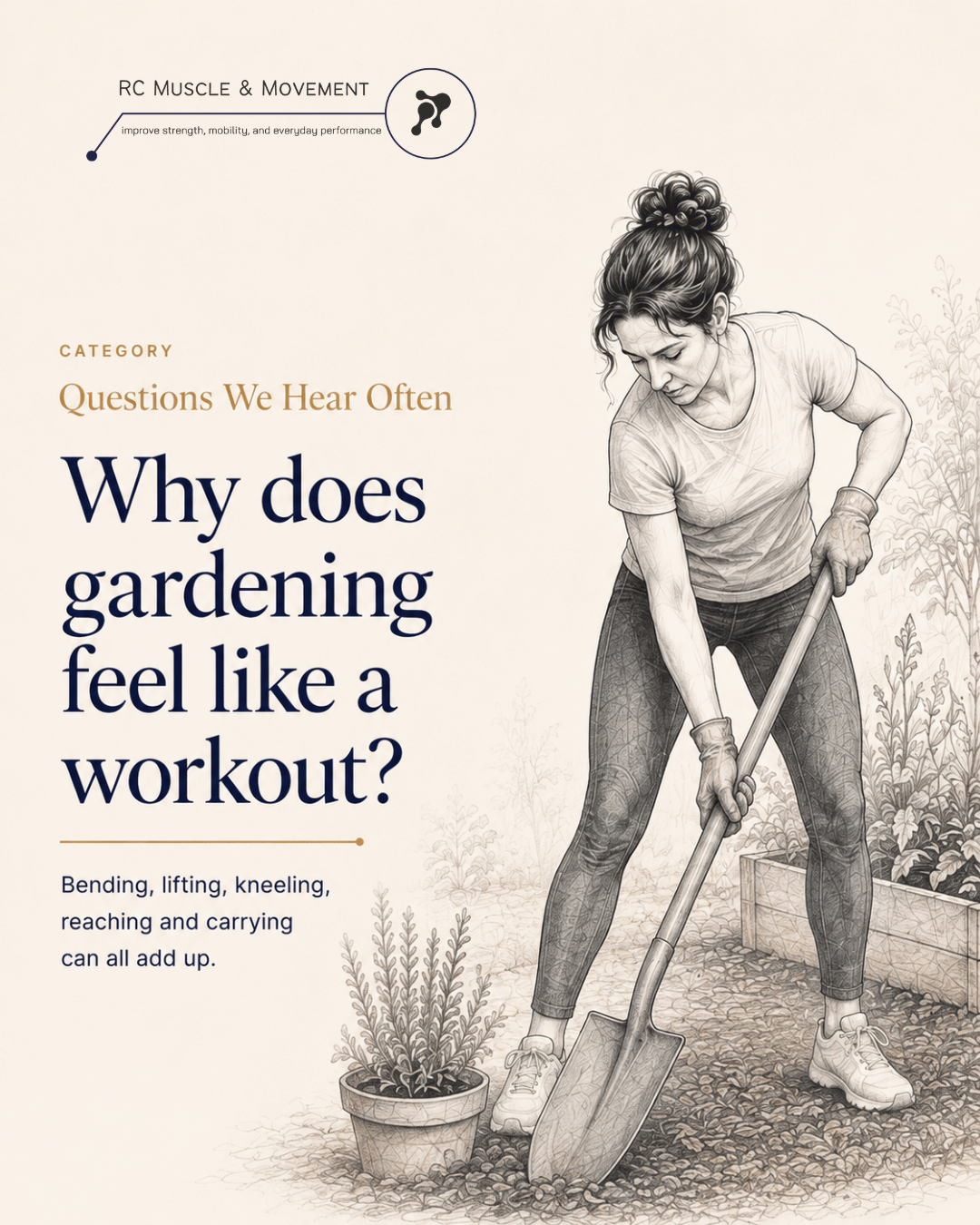
Why Does Gardening Feel Like A Workout?
Gardening can feel like a workout because it uses many everyday movement patterns at once. Bending, lifting, carrying, kneeling, squatting, gripping, reaching and twisting can all add up, especially if you do more than usual. Feeling tired or stiff after gardening does not always mean something is wrong. It often reflects physical demand, repetition, position changes and how prepared your body was for the amount of work.
Why Do I Feel Better Once I Get Moving?
Feeling better once you get moving is common. Movement can increase variety, warm the body up, change how muscles and joints are being used, improve confidence, and reduce the sense of stiffness after sitting or staying still. It does not always mean something is wrong. Often, it means the body responds better when it has a chance to move, adapt and share effort across different areas.
Why One Side Can Feel Tighter Than The Other
One side of the body can feel tighter than the other for many reasons. It may relate to dominant-side habits, repeated work positions, sitting posture, driving, carrying bags, training patterns, strength differences, movement confidence or how your body is sharing effort. Uneven tightness does not automatically mean something is damaged, but if it keeps returning, it may be useful to look at the wider movement picture.
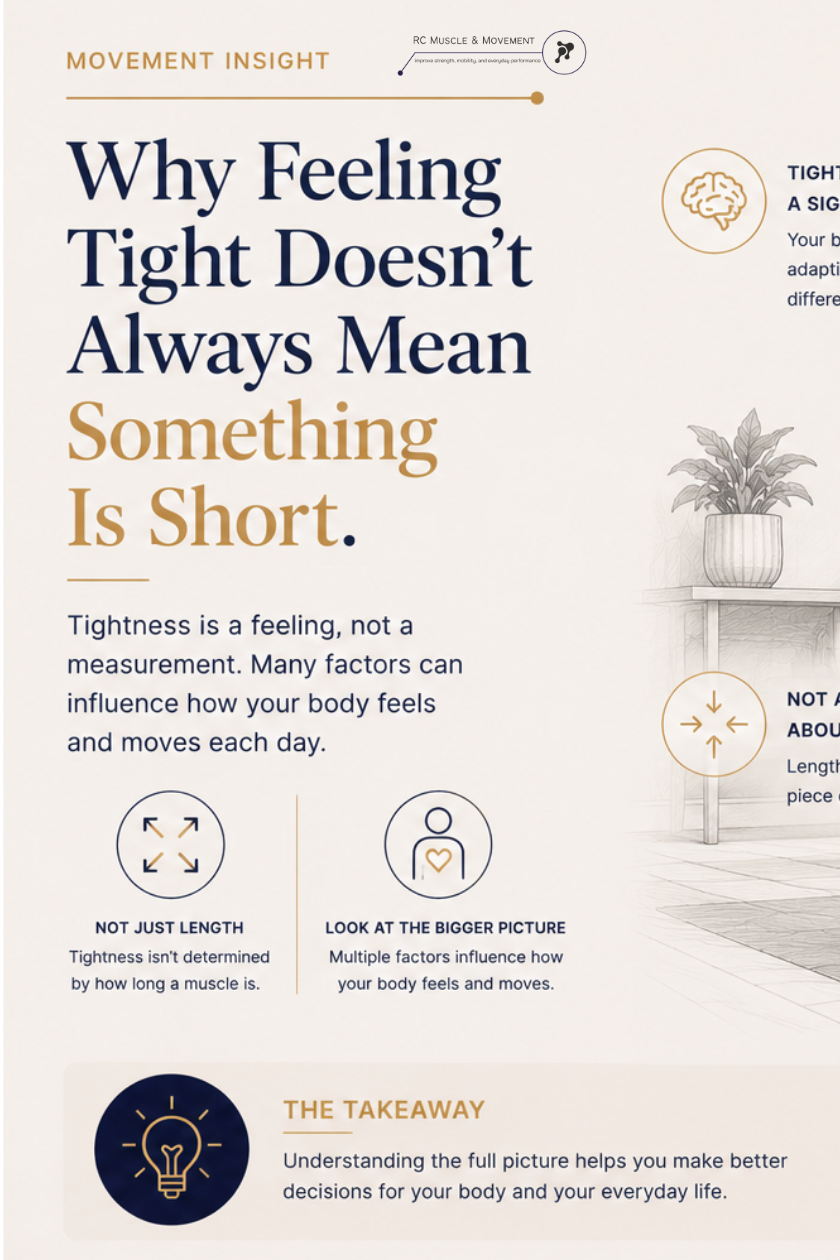
Why Feeling Tight Doesn’t Always Mean Something Is Short
Feeling tight does not always mean a muscle is physically short. Tightness can be influenced by movement habits, workload, recovery, strength, sensitivity, stress, sitting time and how your body is sharing effort. Stretching may help some people, but if tightness keeps returning, it may be more useful to look at the bigger movement picture.
Why Movement Can Feel Harder Some Days Than Others
Movement can feel harder on some days because your body is responding to several things at once: sleep, stress, activity levels, recovery, sitting time, workload and recent movement habits. This does not automatically mean something is wrong. Often, it reflects how your body is coping with the demands placed on it.
Back Pain & Movement Confidence
This blog explains how confidence and back pain are linked, why this is normal, and how small changes can help things settle.
Everyday Back Tension: What’s Actually Going On
Back tension is usually a load‑sharing pattern, not a sign of damage. This blog explains what that means in simple, everyday language.
Why Back Pain Comes and Goes
This blog explains why back pain fluctuates, what influences it, and how to make sense of the patterns you’re noticing.
Movement Confidence: The Missing Piece in Long‑Term MSK Health
Movement confidence improves when the MSK system isn’t overloaded. Learn how sports massage, deep tissue massage, and soft‑tissue therapy support easier, more confident movement.
Understanding MSK Tension: Why Muscles Get Tight and What Actually Helps
Learn why MSK tension builds, why tightness keeps returning, and how sports massage, deep tissue massage, and soft‑tissue therapy help things settle. RCMM East Kilbride.
MSK Support for Everyday Life: How Soft‑Tissue Work Helps You Move Better
Discover how MSK tension builds and how sports massage, deep tissue massage, and soft‑tissue therapy help you move more comfortably. RC Muscle & Movement, East Kilbride.
Why Knee Pain Feels Worse After Long Days on Your Feet
Knee pain can feel worse after long days on your feet because standing, walking slowly, carrying weight and fatigue all change how the body shares effort. The hips, knees, ankles and feet work together during everyday movement. When one area becomes tired or overloaded, the knee may feel more sensitive by the end of the day. This does not automatically mean something is damaged, but recurring or worsening knee pain should be assessed properly.
Why Back Pain Feels Worse After Sitting
Back pain can feel worse after sitting because your body has spent a long time in one position with limited movement variety. Sitting can change how load is shared through your hips, pelvis and lower back. This does not automatically mean damage. For many people, stiffness after sitting improves once movement returns.