Why Do I Feel Better Once I Get Moving?
Summary
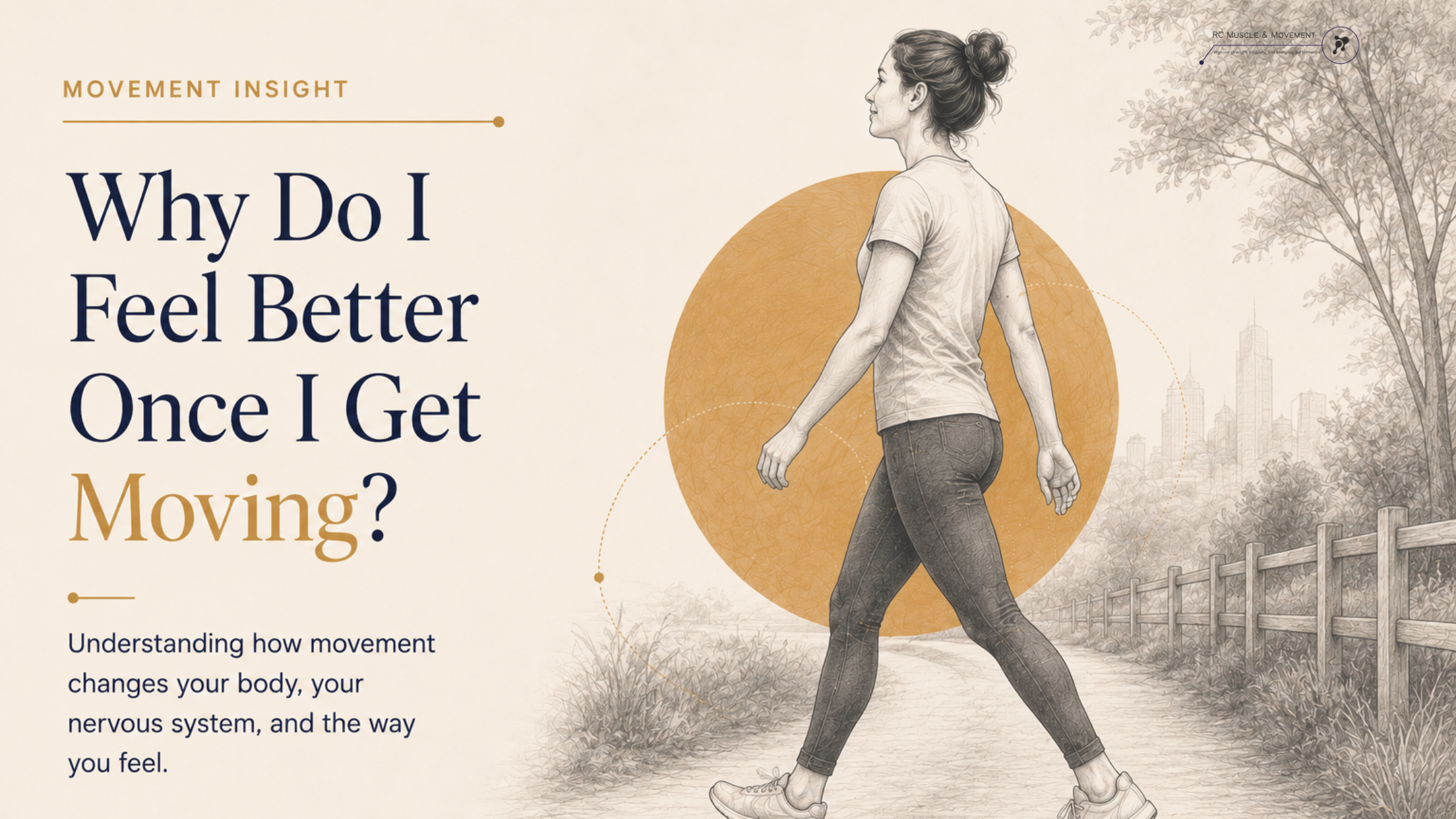
Feeling better once you get moving is common. Movement can increase variety, warm the body up, change how muscles and joints are being used, improve confidence, and reduce the sense of stiffness after sitting or staying still. It does not always mean something is wrong. Often, it means the body responds better when it has a chance to move, adapt and share effort across different areas.
Educational Note
This article is for general education only.
It is not medical advice and it is not a diagnosis.
RC Muscle & Movement does not diagnose injuries or medical conditions. We provide movement-focused assessment, hands-on soft-tissue support and practical guidance within sports therapy and strength-coaching scope , taking an movement led msk approach.
If symptoms are severe, new, worsening, unexplained, linked with swelling, heat, numbness, weakness, loss of control, chest pain, fever, recent trauma, or other concerning changes, it is sensible to seek appropriate medical advice.
A Common Everyday Pattern
Many people notice the same pattern.
They feel stiff when they first stand up.
They feel heavy after sitting for a while.
The first few steps feel awkward.
Their back, hips, knees, neck or shoulders feel more noticeable at the start of the day.
Then, after a few minutes of walking around, climbing stairs, tidying the house, getting into work, or starting a warm-up, things begin to feel easier.
The discomfort may not disappear completely.
But the body feels less stuck.
Movement feels smoother.
Confidence improves.
The first thought is often:
“Why did it feel so bad at first if it eases once I move?”
That is a useful question.
Because the way something feels in the first few moments of movement is not always the full story.
Sometimes the body needs time, variety and gradual exposure before movement starts to feel more normal again.
Stillness And Movement Ask Different Things From The Body
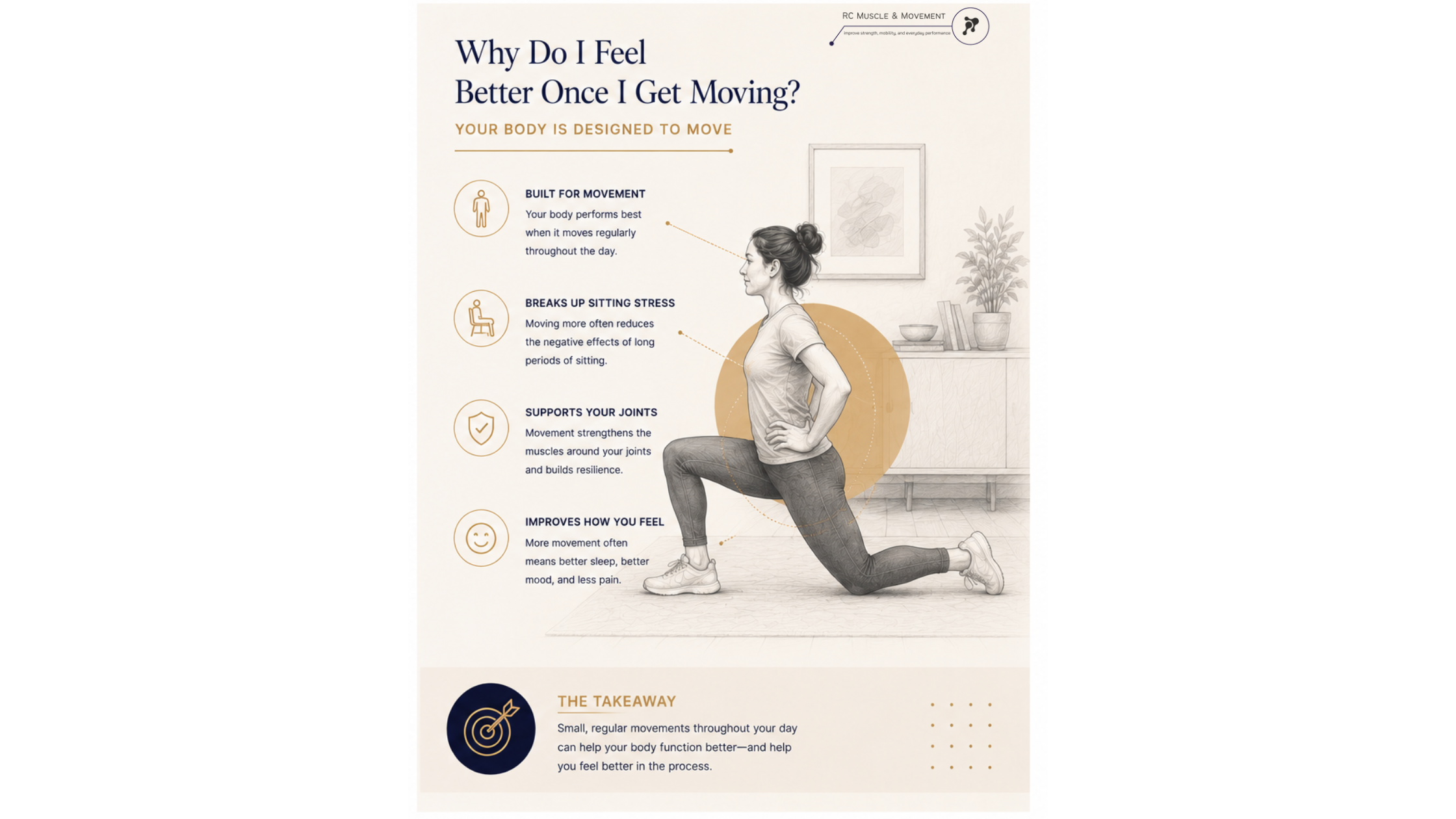
The body is built to move.
That does not mean sitting, resting or standing still are bad.
It simply means the body usually feels better when it has some variety.
When you stay in one position for a while, certain areas may have been held in a similar position for longer than they prefer.
That might happen during:
desk work
driving
watching TV
sleeping
standing still
long meetings
long periods on the sofa
travelling
working in one repeated position
Nothing dramatic has to happen.
There does not need to be an injury.
The body may simply feel less adaptable when it has not had many chances to move.
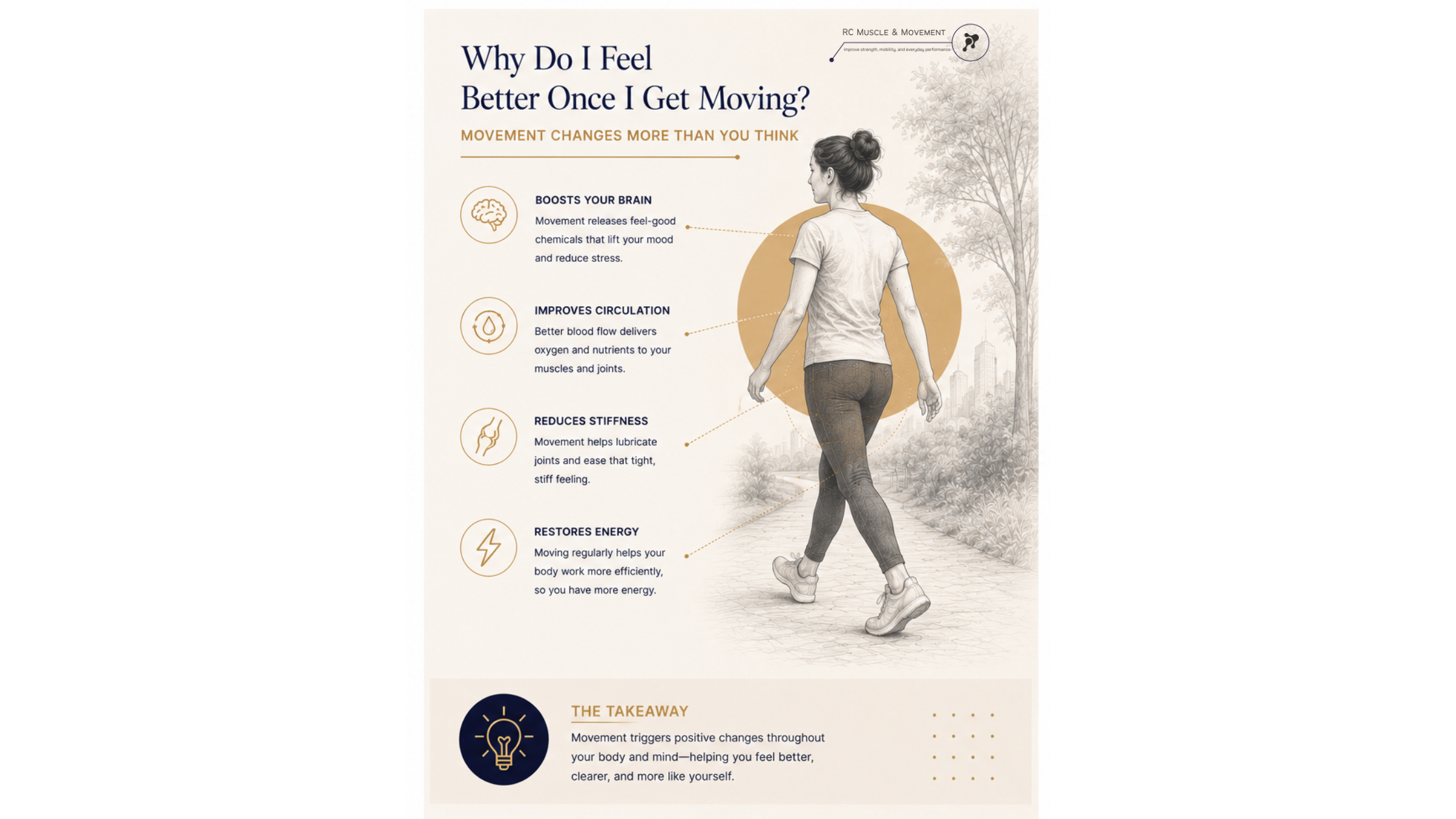
Once you start moving, the body gets more information.
Joints move through different angles.
Muscles switch on and off.
Weight shifts from one side to the other.
Breathing changes.
Circulation increases.
Your nervous system gets a clearer picture of what is actually happening.
That is one reason movement can make the body feel less guarded and easier to trust.
If this sounds like a wider pattern linked to sitting, work, routine or daily physical demand, our Everyday Movement Support page explains how everyday life can affect how movement feels.
The First Few Minutes Are Often A Transition
The first few minutes of movement can feel different from the rest.
That does not automatically mean the movement is harmful.
It may simply be a transition period.
For example:
You stand up after sitting.
At first, your hips feel stiff.
Then after walking around for a few minutes, they feel easier.
Or you start a walk.
The first hill feels harder than expected.
Then your body settles into a rhythm.
Or you start warming up before training.
The first few movements feel awkward.
Then the body feels more coordinated.
This is not unusual.
Movement often feels different once the body has had a chance to warm up, adjust and find a rhythm.
That is why the first few minutes should not always be treated as the final verdict.
A better question is:
“Does this settle as I move, or does it keep worsening?”
That distinction matters.
Warm-Up Is Not Just For Sport
People often think of warming up as something athletes do before training.
But the same basic idea applies to everyday life.
A warm-up is simply a gradual transition from rest into movement.
That could be:
walking around the house before starting the day
doing a few gentle movements before training
moving after a long drive
taking a short walk after sitting
gradually increasing pace instead of rushing straight into activity
using the stairs more slowly at first
easing into housework, gardening or DIY
This does not need to be complicated.
It does not need to be a formal routine.
The body often responds well to being given a few minutes to adjust.
That can be especially true if you have been sitting, sleeping, standing still, stressed, tired or less active than usual.
Movement Changes How Effort Is Shared
One reason movement can feel better is that effort starts to spread across more of the body.
When you are still, one area may feel like it is holding more tension.
When you move, the hips, knees, ankles, feet, spine, shoulders and trunk all get involved in different ways.
For example:
walking shares effort between the hips, knees, ankles and feet
arm swing can change how the upper body feels
stairs ask the legs to work differently from level walking
gentle movement can reduce the feeling of being held in one position
changing pace can change which areas work harder
standing up and sitting down asks the hips and legs to contribute
This is why one area can feel more noticeable when you first start moving, then less noticeable once the body spreads the work around.
The area that feels stiff may not be “wrong”.
It may simply have been doing one job for too long and then needs time to join back into the bigger movement picture.
Movement Can Change Sensitivity
How something feels is not only about structure.
It is also about sensitivity.
The nervous system is constantly deciding how much attention to give to sensations from the body.
Movement can sometimes change that attention.
For some people, gentle activity makes an area feel less threatening, less stiff or less noticeable.
That does not mean movement has magically fixed anything.
It means the body may be responding to:
warmth
circulation
rhythm
confidence
reduced guarding
better movement variety
a clearer sense of control
the nervous system becoming less protective
This is one reason people often say:
“It feels better once I’m up and about.”
That can be a helpful sign.
But it still needs context.
If movement consistently helps, that may suggest the body likes more variety.
If movement makes things worse and worse, that is different.
The pattern matters more than one isolated moment.
Why Sitting Can Make The First Few Steps Feel Worse
A lot of people notice this after sitting.
They get up from a chair and feel stiff, slow or uncomfortable.
Then after moving around, things ease.
This can happen because sitting keeps the body in a fairly narrow range of positions.
The hips are bent.
The knees are bent.
The spine may stay in one shape for a while.
The feet are not doing much.
The trunk and shoulders may be held around the desk, phone, steering wheel or sofa.
Again, this does not mean sitting is bad.
But long periods in one position can make the body feel less ready to move.
That is why a short movement break can sometimes feel better than trying to find the perfect posture.
The goal is not perfect sitting.
The goal is enough variety across the day.
Why It Can Feel Better After Walking
Walking is often useful because it gives the body rhythm and repetition without needing too much thought.
It allows:
the hips to move
the ankles to work
the feet to adapt to the ground
the arms to swing
the spine to rotate gently
breathing to change
the body to settle into a pattern
For many people, walking feels better than standing still.
That makes sense.
Standing still can make the body hold position.
Walking gives it options.
This does not mean walking solves every issue.
It does not mean everyone should walk through every symptom.
But if you often feel better after moving around, walking may be one of the simplest ways your body finds more comfort and rhythm.
Why It Can Change From Day To Day
You may not feel the same every time you move.
Some days movement helps quickly.
Other days the body takes longer to feel comfortable.
That can depend on:
sleep
stress
recent activity
workload
sitting time
standing time
training
recovery
hydration
work demands
emotional load
how much movement variety you have had lately
This is why the same walk, warm-up or morning routine can feel different on different days.
That does not automatically mean something new has gone wrong.
It may simply mean your body is starting the day from a different place.
A busy week, poor sleep, long travel day or heavier workload can change how movement feels.
The body is not a machine that gives the same output every day.
It responds to context.
When Feeling Better With Movement Is Usually Reassuring
Feeling better once you move can often be a reassuring pattern when:
stiffness eases gradually
movement feels easier after a few minutes
walking helps
changing position helps
symptoms are familiar and not worsening
there is no major swelling, weakness or loss of function
confidence improves as you move
you can continue normal daily activity with sensible pacing
This pattern often suggests the body responds well to movement variety.
It does not mean you should ignore what you feel.
It simply means the first sensation is not always the whole story.
Sometimes the body is asking for a gradual start rather than complete rest.
When To Pay More Attention
There are times when it is sensible to be more cautious.
Seek appropriate advice if you notice:
severe or worsening pain
significant swelling
heat, redness or visible change
numbness or weakness
loss of balance or control
difficulty bearing weight
symptoms after a fall or injury
night pain that is unusual for you
fever or feeling unwell
symptoms that do not settle or keep worsening
changes in bladder or bowel control
This is not to create fear.
It is simply about using the right support at the right time.
If something appears outside the most appropriate scope for an RCMM appointment, we will explain clearly and help guide you toward the most suitable next step.
If movement helps but the same issue keeps returning, a Movement & Function Assessment can help build a clearer picture of what may be contributing.
What You Can Notice Before Booking Support
If you feel better once you move, it can be useful to notice the pattern.
You do not need to diagnose yourself.
You do not need to collect huge amounts of information.
Just pay attention to a few simple things:
When does it feel most stiff or uncomfortable?
How long does it take to ease?
What type of movement helps?
Does walking help more than standing?
Does sitting make it worse again?
Is it linked to work, training, sleep or stress?
Is it one area or several?
Does it feel better with gentle movement or only with rest?
Is the pattern improving, staying the same or getting worse?
These observations can make a session more useful.
They help build a clearer picture of how your body is responding to everyday life.
What May Help Day To Day
General options that may help include:
breaking up long periods of sitting
changing position before stiffness builds
starting movement gradually
walking for a few minutes after being still
using a short warm-up before activity
building strength gradually
varying daily movement
avoiding sudden jumps in workload
giving the body time to adjust in the morning
noticing stress, sleep and recovery patterns
This is not a treatment plan.
It is general movement guidance.
The right next step depends on the person, the pattern and what else is going on.
But for many people, the starting point is simple:
less time stuck in one position, more opportunities for useful movement.
Where Sports Massage May Fit
Sports Massage may be useful when one specific area feels tight, restricted or overworked.
For example, if your calves, hips, back, shoulders or neck feel more comfortable after movement but keep building tension through the week, hands-on support may help that area feel easier to move.
Sports Massage can be helpful for:
local tension
overworked areas
movement-related tightness
training or work build-up
areas that feel restricted during activity
But if the same issue keeps returning, or if several areas are involved, it may be worth looking beyond the area itself.
That is where assessment can be more useful.
When Assessment Is The Better Starting Point
A Movement & Function Assessment is usually the better starting point when:
you are unsure why something keeps happening
movement helps but the same issue keeps returning
more than one area is involved
your confidence in movement has changed
previous approaches only helped temporarily
you want to understand the bigger picture
you are unsure whether massage, movement guidance or strength work would be most useful
The assessment is not about giving you a diagnosis.
It is about looking at how your body is moving, what your day involves and what support may fit best.
The goal is clarity.
Not over-complication.
Key Takeaways
Feeling better once you get moving is common.
It does not automatically mean something is wrong.
Movement may help because it:
gives the body more variety
warms tissues gradually
changes how effort is shared
reduces the feeling of being stuck
helps confidence
changes sensitivity
gives the nervous system better information
allows the body to settle into rhythm
The first few minutes of movement are often a transition.
They do not always tell the whole story.
If movement helps and the pattern is familiar, that can be useful information.
If symptoms are severe, worsening, unusual or concerning, seek appropriate advice.
If the same issue keeps returning and you are unsure why, it may be worth looking at the wider movement picture.
How RCMM Can Help
RC Muscle & Movement is a movement-first sports massage and assessment clinic in East Kilbride.
We support people dealing with tightness, stiffness, restricted movement and areas that feel overworked during everyday life, work, training and routine.
If you often feel better once you get moving, but the same issue keeps returning, we can help you explore what may be contributing.
That may involve:
Movement & Function Assessment
Sports Massage
hands-on soft-tissue support
practical movement guidance
strength-informed support where helpful
clear explanation in everyday language
The aim is to help movement feel clearer, more comfortable and easier to trust.
If one specific area feels tight or overworked, Sports Massage or deep tissue may be useful. If the same pattern keeps returning or you are unsure what is contributing, the Movement & Function Assessment is usually the clearest starting point.
related condition links:
Everyday Movement Support
Back Pain
Hip Pain
Neck & Shoulder Pain
FAQs
Why do I feel stiff until I start moving?
You may feel stiff until you start moving because the body has been in one position for a while. Movement gives your joints, muscles and nervous system more variety and can help the body feel less guarded.
Is it normal to feel better after walking around?
Yes, many people feel better after walking around. Walking gives the body rhythm, movement variety and a gradual transition from stillness into activity.
Why do I feel worse after sitting but better once I move?
Sitting keeps the hips, knees, spine and upper body in a limited range of positions. When you get up and move, the body has more chances to share effort and change how it feels.
Does feeling better with movement mean nothing is wrong?
Not necessarily. It may be a reassuring pattern, but it does not rule everything out. If symptoms are severe, worsening, unusual or concerning, seek appropriate medical advice.
Should I rest if I feel stiff?
Sometimes rest is useful, especially if you are tired or overloaded. But long periods of complete stillness can make some people feel more stiff. Often, gentle movement and sensible pacing are helpful.
Why does movement help some days but not others?
Movement can feel different depending on sleep, stress, workload, recovery, recent activity and how much time you have spent in one position.
What should I book if I feel better once moving but it keeps coming back?
If it is one clear area, Sports Massage may be appropriate. If the issue keeps returning, feels unclear, affects confidence or involves several areas, Movement & Function Assessment is usually the better starting point.
Is this the same as needing to warm up?
Sometimes, yes. A warm-up is simply a gradual transition into movement. Everyday activities can feel easier when the body has a few minutes to adjust.
Source Base Used
NHS. Back pain.
NICE. Low back pain and sciatica in over 16s: assessment and management. NG59.
NHS. Physical activity guidelines for adults aged 19 to 64.
WHO. Guidelines on physical activity and sedentary behaviour. 2020.
Bull FC et al. World Health Organization 2020 guidelines on physical activity and sedentary behaviour. British Journal of Sports Medicine. 2020.
Bishop D. Warm Up I: Potential mechanisms and the effects of passive warm up on exercise performance. Sports Medicine. 2003.
Srinivasan D, Mathiassen SE. Motor variability in occupational health and performance. Clinical Biomechanics. 2012.
Geneen LJ et al. Physical activity and exercise for chronic pain in adults: an overview of Cochrane Reviews. Cochrane Database of Systematic Reviews. 2017.
Vaegter HB, Jones MD. Exercise-induced hypoalgesia after acute and regular exercise: experimental and clinical manifestations and possible mechanisms in individuals with and without pain. Pain Reports. 2020.