
Movement, Massage & MSK Articles
Straightforward, evidence-informed articles from RC Muscle & Movement in East Kilbride about massage, MSK health, mobility and everyday movement. Start with the question closest to what you have noticed.
Why Am I So Tired After Golf?
Golf may not feel like a hard workout, but 18 holes can mean hours on your feet, thousands of steps, repeated swings and sustained concentration. Here’s why that can leave you surprisingly tired.
Why Am I Sore After Trying a New Sport or Fitness Class?
A new sport or fitness class can use familiar muscles in unfamiliar ways. This article explains delayed soreness, why the first session may feel particularly noticeable and how to distinguish an expected response from something that deserves closer attention.
Is Soreness After Massage Normal?
Mild tenderness or aching can sometimes happen after massage. It should not be treated as proof that the session worked, and severe or worsening symptoms deserve attention. This article explains what may be expected, why responses differ and when to contact your practitioner.

Do You Have to Play Sport to See a Sports Therapist?
You do not need to play sport or identify as an athlete to see a Sports Therapist. The title describes professional training in movement, exercise science, assessment and musculoskeletal support. At RCMM, that knowledge is used to support everyday adults dealing with tightness, stiffness, overworked areas and movement that feels harder than it should.
Why Does Tightness Come Back After Massage?
Tightness can come back after massage because massage may help an area feel more comfortable, but it does not automatically remove the daily demands that keep loading that area. Workload, posture, stress, repeated positions, activity levels, sleep, strength, movement confidence and recovery can all influence whether the same tightness returns. This does not mean massage has failed. It may mean the area felt better for a while, but the wider pattern has not changed yet.
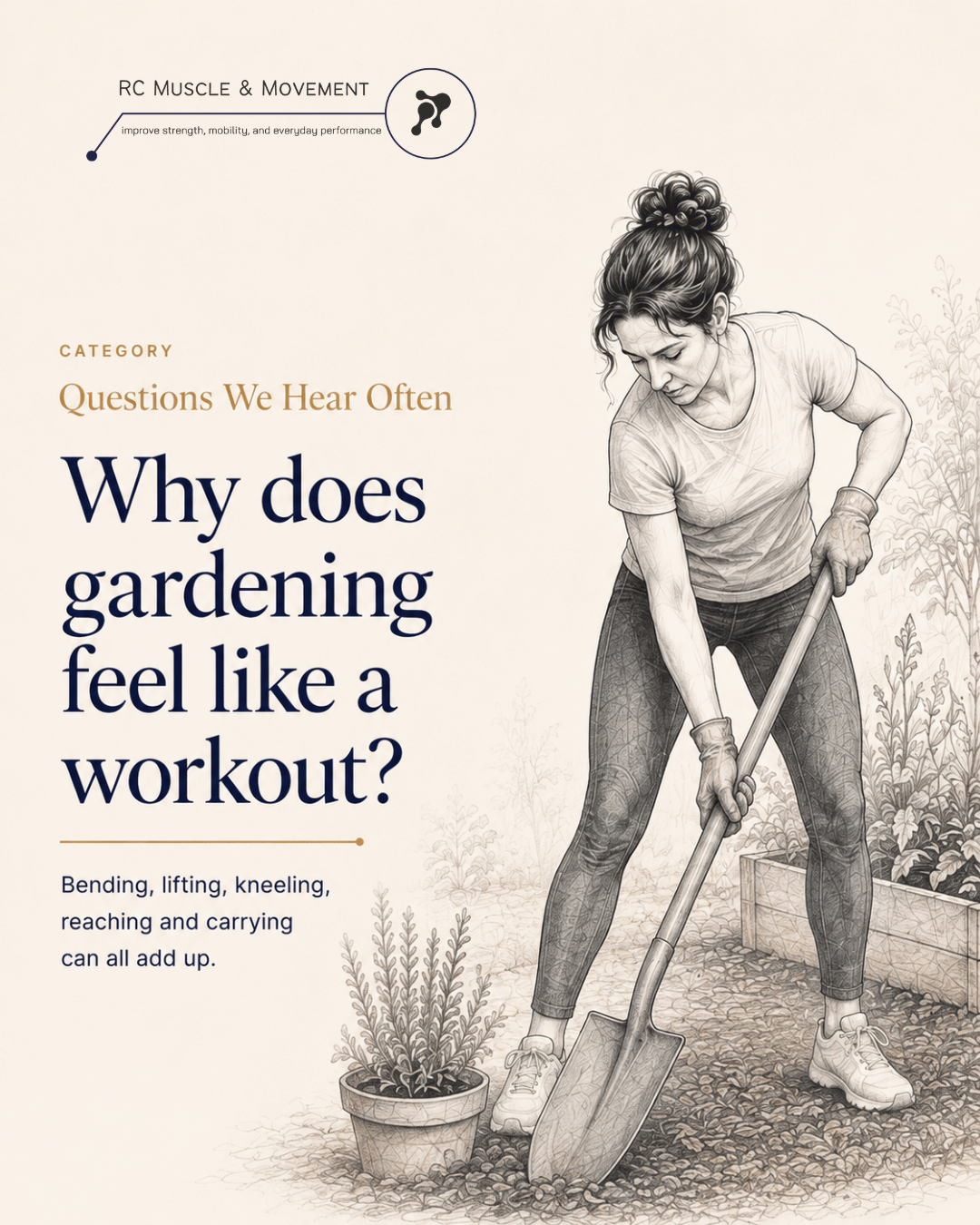
Why Does Gardening Feel Like A Workout?
Gardening can feel like a workout because it uses many everyday movement patterns at once. Bending, lifting, carrying, kneeling, squatting, gripping, reaching and twisting can all add up, especially if you do more than usual. Feeling tired or stiff after gardening does not always mean something is wrong. It often reflects physical demand, repetition, position changes and how prepared your body was for the amount of work.