Why Does Gardening Feel Like A Workout?
Summary
Gardening can feel like a workout because it uses many everyday movement patterns at once. Bending, lifting, carrying, kneeling, squatting, gripping, reaching and twisting can all add up, especially if you do more than usual. Feeling tired or stiff after gardening does not always mean something is wrong. It often reflects physical demand, repetition, position changes and how prepared your body was for the amount of work.
Educational Note
This article is for general education only.
It is not medical advice and it is not a diagnosis.
RC Muscle & Movement does not diagnose injuries or medical conditions. We provide movement-focused assessment, hands-on soft-tissue and musculoskeletal support within sports therapy and strength-coaching scope.
If pain is severe, new, worsening, linked with swelling, numbness, weakness, loss of control, fever, recent trauma, chest pain, unexplained symptoms, or other concerning changes, it is sensible to seek appropriate medical advice.
Gardening Is More Physical Than People Realise
Gardening does not always look like exercise.
There is no gym kit.
No planned warm-up.
No formal sets or reps.
No one writes down how many times they bent down, lifted a plant pot, carried compost, knelt to weed, reached into a border, pushed a mower or stood back up from the ground.
But your body still has to do the work.
That is why so many people recognise the same pattern:
You go out to “just do a bit in the garden.”
Two hours later, your back feels tired.
Your legs feel heavy.
Your shoulders feel used.
Your hands and forearms feel worked.
Your knees notice the kneeling.
Your hips feel stiff when you stand back up.
The next day, you feel like you have done a workout.
That does not automatically mean something is wrong.
It often means gardening asked more from your body than you expected.
Gardening Uses Several Movement Patterns At Once
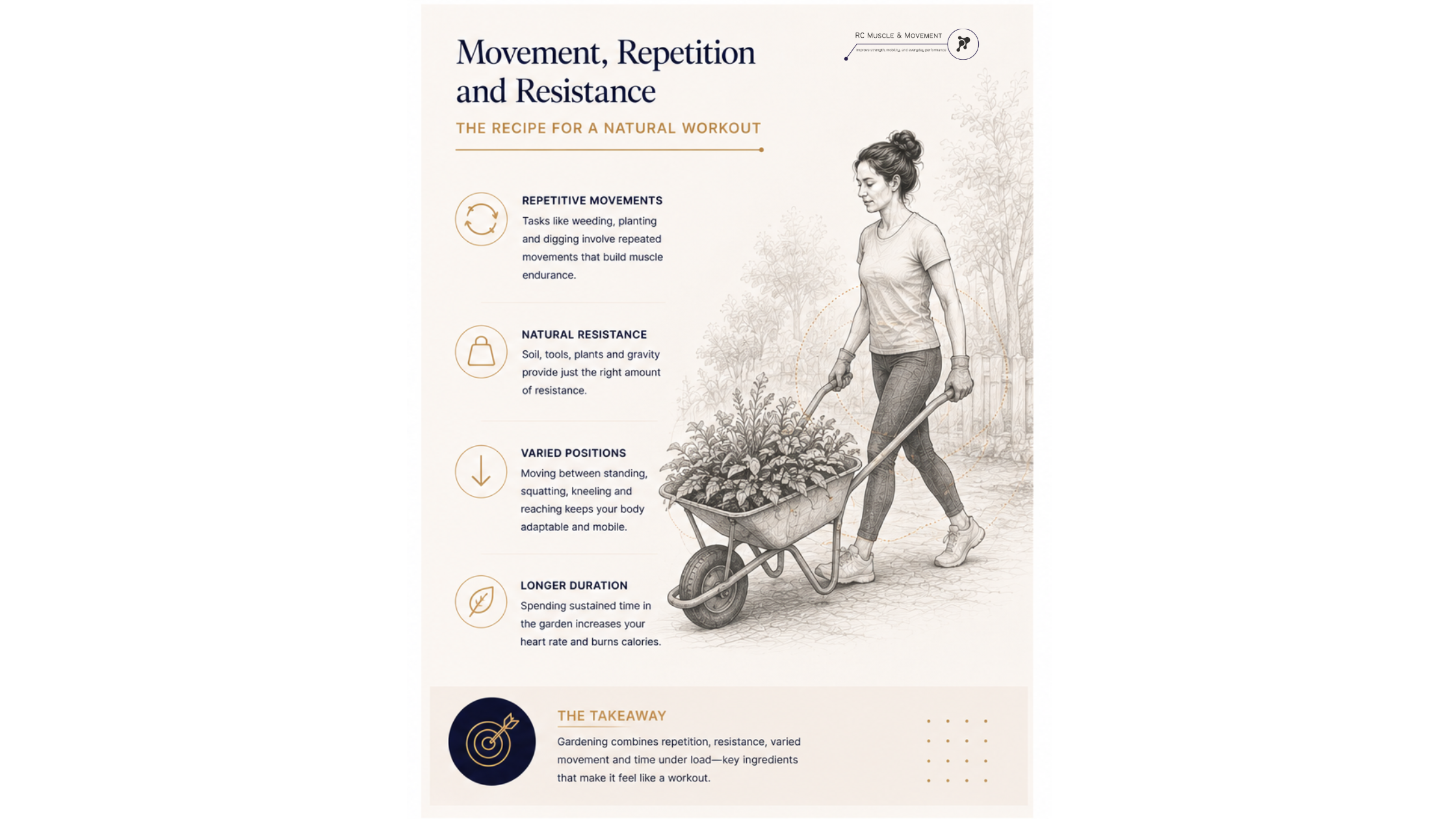
One reason gardening can feel so demanding is that it does not use just one simple movement.
It often combines:
bending
squatting
kneeling
reaching
pulling
pushing
gripping
lifting
carrying
twisting
getting down to the ground
getting back up again
These are normal human movements.
But when they happen repeatedly, for longer than usual, or in awkward positions, they can feel like a lot.
Gardening is not always heavy.
But it can be repetitive.
It is not always fast.
But it can involve long periods in low positions.
It is not always intense.
But it often uses the whole body.
That is why gardening can feel very different from a normal walk, even if both count as physical activity.
Walking is rhythmic and predictable.
Gardening is stop-start, varied and often uneven.
You may move from digging to lifting to kneeling to reaching to carrying without much awareness of how many times your body is changing position.
That variety is useful, but it is still demand.
If everyday tasks such as gardening, DIY, housework or work demands often leave your body feeling overloaded, our Everyday Movement Support page explains how daily life can influence movement comfort.
It Is Often The Repetition That Catches People Out
A single bend to pick something up may not feel like much.
A single squat to reach the ground may be fine.
A single carry across the garden may feel manageable.
The issue is usually not one movement.
It is the total amount.
For example:
weeding may involve repeated bending or kneeling
planting may involve repeated squatting and reaching
mowing may involve pushing, turning and gripping
digging may involve repeated force through the legs, hips, trunk and arms
pruning may involve reaching and holding the arms up
carrying compost, pots or watering cans adds load
tidying may involve lots of small lifts and carries
Each part may feel small on its own.
Together, they can build.
This is similar to what happens during a busy work shift, a day of housework, or a long walk around shops.
The body does not only respond to intensity.
It also responds to volume, repetition, position and recovery.
Gardening Often Puts The Body In Awkward Positions
The garden does not arrange itself around your body.
You often have to adapt to the task.
That might mean:
leaning over a border
twisting to reach something
kneeling on uneven ground
bending from the back for longer than usual
squatting in a position you do not use often
carrying something awkward rather than neatly balanced
reaching across plants or raised beds
working with tools at an awkward height
These positions are not automatically dangerous.
The body is allowed to bend, twist, kneel and reach.
But if you stay in one position for a while, repeat it many times, or add load while tired, the work can feel harder.
That is often why someone feels fine while they are gardening, then notices it later.
The body has been doing a lot of small jobs.
You only feel the total at the end.
Why Your Back May Feel It After Gardening
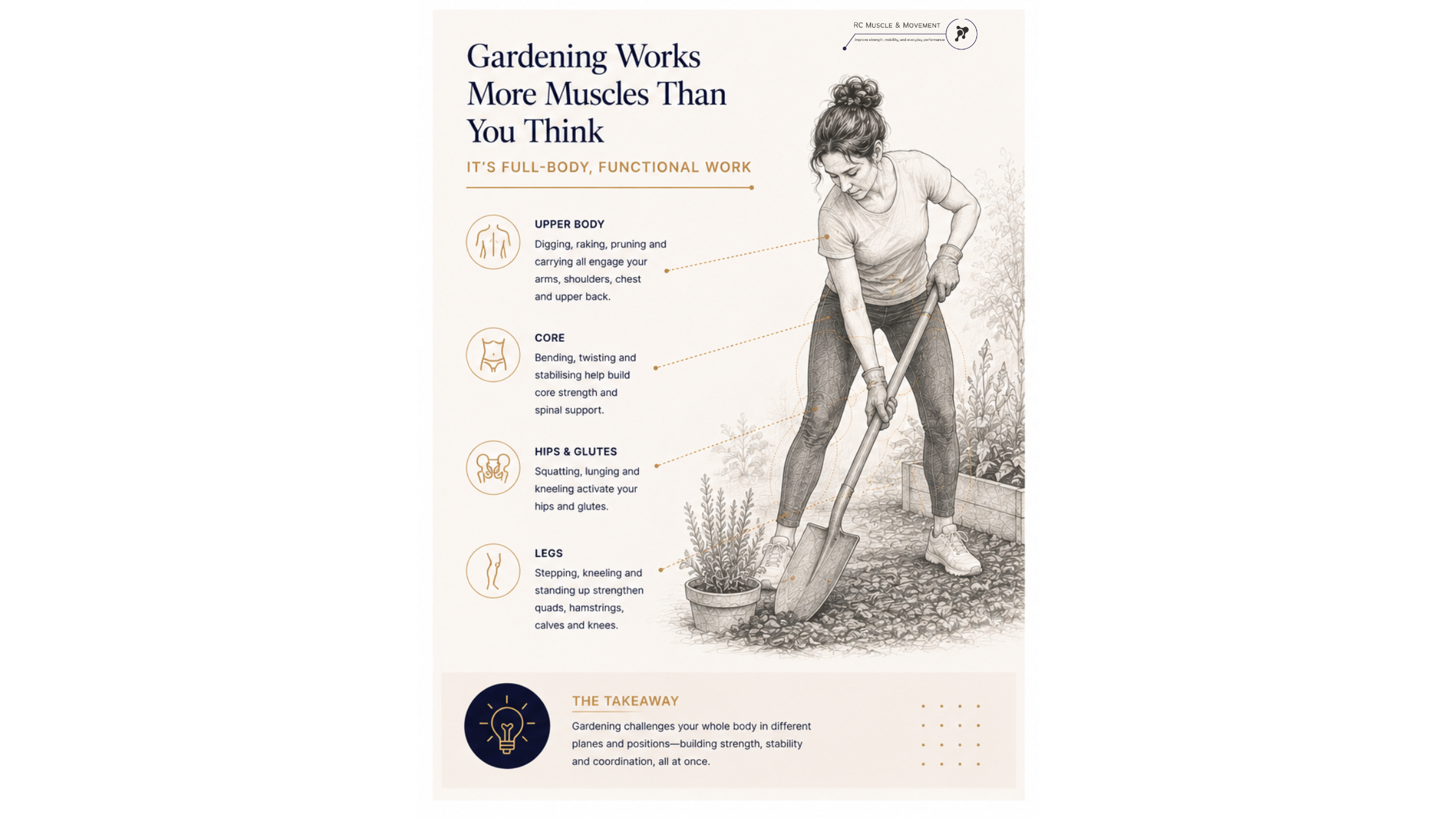
Back discomfort after gardening is common because gardening often combines bending, reaching, lifting, carrying and staying in one position for longer than planned.
Again, this does not mean the back is fragile.
Your back is designed to move.
But the back may feel more noticeable when it has been asked to:
hold a bent position
repeatedly move between bending and standing
help with lifting or carrying
rotate while reaching
manage awkward positions
support the body while the arms are working
A lot of people also garden in bursts.
They may not do much of that type of movement for weeks, then spend several hours doing it all at once.
That sudden increase can make the back feel worked afterwards.
The answer is not usually “never bend.”
A more useful question is:
How much did your body do, and was it prepared for that amount?
Why Your Hips And Knees May Feel It Too
Gardening often involves getting closer to the ground.
That means the hips and knees may be asked to do more than usual.
You may notice this with:
kneeling
squatting
crouching
stepping over borders
standing up from the ground
getting in and out of low positions
walking across uneven grass
carrying while turning
using stairs or slopes in the garden
If your hips, knees or ankles do not regularly spend time in those positions, they may feel stiff or tired afterwards.
That is not automatically a problem.
It may simply mean the task asked for more range, control or strength than your body uses on a normal day.
This is where gardening overlaps with everyday capability.
Getting down to the ground and back up again is not just a gardening task.
It is a useful life movement.
Why Your Shoulders, Arms And Hands Can Feel Worked
Gardening is not only about the back and legs.
The upper body often works hard too.
You may be:
gripping tools
pulling weeds
pruning branches
carrying bags
holding a watering can
pushing a mower
reaching overhead
moving soil or compost
using hand tools for longer than usual
This can ask a lot from the hands, forearms, shoulders, upper back and neck.
Even lighter tasks can feel demanding if they involve repetition or time.
For example, pruning for half an hour may not feel like “exercise”, but your arms and shoulders have still been holding, gripping and reaching.
That is why the neck and shoulders can feel tired after gardening, even if you were not doing anything that felt especially heavy.
Gardening Can Count As Physical Activity
Gardening sits in an interesting place.
It can be a hobby, a household task, a way to relax, and a form of physical activity.
Some forms of gardening are light.
Some are moderate.
Some are genuinely demanding.
Heavy gardening, such as digging and shovelling, is recognised in public health guidance as a type of muscle-strengthening activity.
That does not mean gardening replaces all forms of exercise.
It does mean it can contribute to physical activity, especially when it involves effort, repeated movement and whole-body work.
This is why the phrase “it felt like a workout” is often accurate.
Not because gardening is the same as a gym session.
But because your body has been doing physical work.
Why You May Feel It More The Next Day
Sometimes you feel fine while gardening, then notice stiffness or tiredness the next day.
That can happen after many types of physical activity, especially if the amount, type or intensity was more than your body is used to.
Gardening often includes movements people do not regularly practise:
repeated bending
prolonged kneeling
low squats
loaded carries
twisting while reaching
pushing and pulling
gripping for long periods
getting up and down from the ground
If those movements are unfamiliar, the body may feel worked afterwards.
That does not automatically mean harm.
It may simply be a response to doing more than usual.
A useful question is:
Does it ease over the next day or two, or is it worsening and limiting normal activity?
That distinction matters.
If gardening regularly leaves the same area feeling sore, restricted or overloaded, a Movement & Function Assessment can help build a clearer picture of what may be contributing.
What Usually Makes Gardening Feel Harder
Gardening may feel harder when several factors stack together.
Common examples include:
doing too much in one session
not taking breaks
working in awkward positions
lifting more than usual
kneeling or squatting for longer than usual
using tools that make you reach too far
working when tired
gardening after a busy week
starting suddenly after months of doing very little
working on uneven ground
carrying loads with one hand
rushing to finish before weather changes
These are normal practical factors.
They do not mean you have done anything wrong.
They simply change the amount of demand your body has to manage.
The body usually copes better when demand is built gradually rather than suddenly thrown at it.
What Can Help Before And During Gardening
This is general guidance, not a treatment plan.
Useful options may include:
start with a smaller amount than you think you can manage
change position regularly
alternate heavier jobs with lighter jobs
split bigger tasks across more than one day
keep frequently used tools closer to you
avoid staying bent or kneeling for too long without changing position
carry smaller loads more often instead of one heavy load
use both hands where possible
take short breaks before you feel exhausted
stand up and move around between tasks
build general strength gradually outside gardening season
The goal is not to make gardening perfect.
The goal is to make it more manageable.
Most people do not need a complicated routine.
They need better pacing, more awareness of total workload, and enough physical capacity for the tasks they want to do.
Why Everyday Strength Matters Here
Gardening is a good example of why strength matters outside the gym.
You do not need to be a “gym person” to benefit from being stronger.
Strength supports daily tasks such as:
carrying compost
lifting plant pots
getting up from the ground
pushing a mower
pulling weeds
walking on uneven ground
carrying watering cans
holding tools
balancing while reaching
This is what RCMM means by everyday capability.
It is not about performance.
It is not about lifting the heaviest weight possible.
It is about feeling more able to do normal life without everything feeling harder than it should.
Strength is useful when it helps you live more comfortably and confidently.
Gardening simply makes that obvious.
Where Sports Massage May Fit
Sports Massage may be useful when one specific area feels tight, overworked or restricted after gardening.
For example:
calves after standing or working on uneven ground
hips after kneeling or squatting
lower back after bending and lifting
shoulders after pruning or reaching
forearms after gripping tools
neck and upper back after repeated forward positions
Sports Massage can help with targeted hands-on support when a clear area feels overloaded.
But if the same issue keeps returning every time you garden, it may be worth looking at the wider movement picture as well.
Where Deep Tissue Massage May Fit
Deep Tissue Massage may be a good fit when gardening leaves you feeling generally tense, heavy or physically worn out.
For example:
full-body tiredness after a busy weekend
general tension through the back, hips and shoulders
a feeling of needing a reset
body-wide stiffness after doing more than usual
This sits more in the Comfort Path.
The aim is to help the body feel more comfortable.
It is not a full movement assessment.
It is not about analysing why something keeps happening.
It is useful when the main goal is general hands-on support and comfort.
When Assessment May Be The Better Starting Point
A Movement & Function Assessment may be more useful when:
the same area reacts every time you garden
gardening affects your confidence
getting up and down from the ground feels difficult
you avoid certain tasks because of discomfort
several areas feel involved
you are unsure whether massage, strength work or movement guidance would be most helpful
symptoms are recurring, unclear or affecting daily life
The assessment is not about diagnosing an injury.
It is about looking at how your body is moving, what your daily life asks from it, and what may help you feel more capable.
That may include movement observation, hands-on support where appropriate, and practical next steps.
The goal is clarity.
Not overcomplication.
When To Get Medical Advice
It is sensible to seek medical advice if pain is severe, worsening, unusual, linked with major swelling, numbness, weakness, loss of control, fever, recent trauma, or symptoms that are not settling as expected.
This is not to create fear.
It is simply about using the right support at the right time.
If something appears outside the most appropriate scope for an RCMM appointment, we will explain clearly and help guide you toward the most suitable next step.
Key Takeaways
Gardening can feel like a workout because it often involves several physical demands at once.
It may include:
bending
lifting
carrying
kneeling
squatting
reaching
gripping
pushing
pulling
twisting
getting up and down from the ground
The tiredness or stiffness afterwards does not automatically mean something is wrong.
It may simply reflect the amount of work your body has done.
Gardening is a useful reminder that everyday life can be physically demanding.
The goal is not to avoid movement.
The goal is to build enough comfort, confidence and capability to do the things you enjoy.
How RCMM Can Help
RC Muscle & Movement is a movement-first sports massage and assessment clinic in East Kilbride.
We support people dealing with tightness, stiffness, restricted movement and areas that feel overworked during everyday life, work, training and routine.
If gardening regularly leaves your body feeling sore, stiff or overloaded, we can help you understand what may be contributing and decide what support fits best.
That may involve:
hands-on soft-tissue support
practical movement guidance
strength-informed support where helpful
clear explanation in everyday language
The aim is to help everyday movement feel clearer, more comfortable and easier to manage.
If gardening leaves one specific area feeling tight or overworked, Sports Massage may be useful. If the same issue keeps returning or several areas are involved, the Movement & Function Assessment is usually the clearest starting point. For general full-body tension, Deep Tissue Massage may fit better.
Optional related condition links:
Everyday Movement Support
Back Pain
Hip Pain
Knee Pain
Neck & Shoulder Pain
FAQs
Why does gardening make me feel so tired?
Gardening can make you feel tired because it often involves repeated bending, lifting, carrying, kneeling, gripping and reaching. Even if each task feels small, the total workload can add up.
Why do I feel stiff after gardening?
You may feel stiff after gardening because your body has spent time in positions you do not use often, such as kneeling, squatting, bending or reaching. Stiffness can also be linked to doing more than your body was prepared for that day.
Is gardening good exercise?
Gardening can contribute to physical activity, especially when it involves effort, movement variety, lifting, digging, carrying or repeated tasks. Heavy gardening can also count as a muscle-strengthening activity.
Why does my back hurt after gardening?
Gardening often asks the back to help with bending, lifting, reaching, carrying and staying in one position. This does not automatically mean your back is damaged, but it may mean the task asked more from your body than usual.
Why do my legs ache after gardening?
Your legs may ache after gardening because squatting, kneeling, standing, carrying, walking on uneven ground and getting up from the floor all ask the hips, knees, ankles and feet to work.
Should I stretch after gardening?
Gentle movement or stretching may feel helpful for some people, but it is not the only option. Pacing, changing position, building strength gradually and avoiding sudden jumps in workload can also matter.
What should I book if gardening keeps making the same area sore?
If one clear area feels tight or overworked, Sports Massage may be suitable. If the same issue keeps returning, several areas are involved, or you are unsure what is contributing, Movement & Function Assessment is usually the clearer starting point.
Is soreness after gardening always a problem?
Not always. Some tiredness or stiffness can happen after doing more than usual. If symptoms are severe, worsening, unusual, or linked with concerning changes, it is sensible to seek appropriate medical advice.
Source Base Used
NHS. Physical activity guidelines for adults aged 19 to 64.
NHS. Physical activity guidelines for older adults.
NHS Inform. Physical activity guidelines.
WHO. Guidelines on physical activity and sedentary behaviour. 2020.
Bull FC et al. World Health Organization 2020 guidelines on physical activity and sedentary behaviour. British Journal of Sports Medicine. 2020.
Ainsworth BE et al. 2011 Compendium of Physical Activities: a second update of codes and MET values. Medicine & Science in Sports & Exercise. 2011.
HSE. Manual handling at work.
HSE. Musculoskeletal disorders at work.
HSE. Guidance for lifting tasks.
NHS. Back pain.
NHS. Knee pain.