What Is Movement Confidence - and How Can You Rebuild It?
Written by Paula, RCMM Operations & Content Lead
Originally published: 8 May 2026
Last updated: 28 August 2026
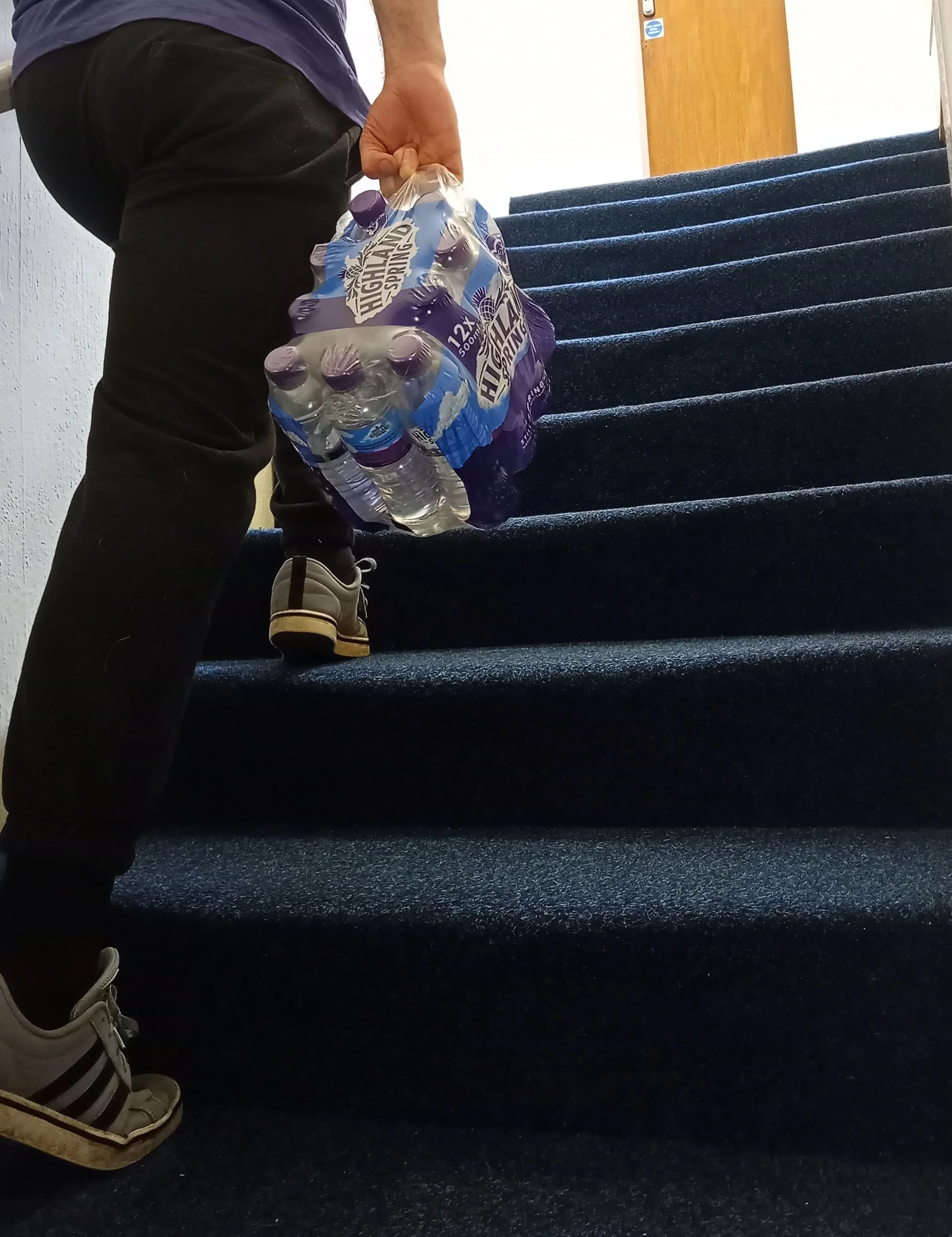
Summary
Movement confidence is how able and willing you feel to carry out a particular movement or everyday task.
It can change after pain, an injury, a flare-up, a fall, confusing advice or simply a long time away from the activity. It is not a measurement of damage, strength or courage.
Confidence usually grows through the right information, a manageable starting point and repeated experiences that make the task feel more familiar again.
Educational Note
This article is for general education only. It is not medical advice, a diagnosis or an individual exercise prescription.
RC Muscle & Movement does not diagnose medical conditions. We provide movement-focused assessment, hands-on soft-tissue work and practical guidance within our Sports Therapy, massage and strength-coaching scope.
If symptoms are new, severe, worsening or linked with a significant injury, medical assessment may be the more appropriate first step.

When a Familiar Movement Starts to Need a Conversation
Some movements happen without much thought.
You carry the washing upstairs. Step off a kerb. Reach into a cupboard. Get down to the floor and back up again.
Then something changes.
Perhaps the task hurt once. Perhaps an area has felt unpredictable for a while. Perhaps you were told to be careful, or you have simply not done the movement in months.
The next time, there is a pause:
Can I manage this?
Should I do it differently?
What if it feels the same again?
That pause is not weakness, and it does not automatically mean your body is incapable. It is one way movement confidence can change.
The change can be quiet. You start using the handrail every time. You make several lighter trips instead of carrying one bag. You stop joining in with a particular activity. You ask somebody else to do a job you once managed without thinking.
None of those choices is automatically wrong. Sometimes adapting or protecting an area is entirely sensible. The useful question is whether the change still fits the situation—or whether uncertainty is beginning to decide more of your day than it needs to.
Movement confidence matters because musculoskeletal health is not only about symptoms. It is also connected with function and participation: being able to work, manage daily tasks and remain involved in the parts of life that matter to you. The RCMM guide to musculoskeletal support explains that wider picture.
What Does Movement Confidence Mean?
Movement confidence is an everyday phrase rather than a medical diagnosis.
At RCMM, we use it to describe how capable, prepared and willing someone feels to perform a particular movement or task.
Research often discusses related ideas using more technical terms. Self-efficacy refers to a person’s belief that they can carry out a behaviour or manage a situation. Pain self-efficacy looks more specifically at confidence in functioning despite pain. Fear of movement, sometimes called kinesiophobia when it is more pronounced, describes concern that movement or activity may cause pain, injury or harm.
These ideas overlap, but they are not identical.
Someone can feel uncertain about one task without having a strong fear of movement. They can also feel confident in the gym but hesitate when lifting a child, walking on uneven ground or getting up from the floor.
Confidence is often task-specific.
It is not a personality test. It can change from one movement, setting or day to another.
It is also not proof that a tissue is ready for every demand. Feeling confident does not guarantee that an injury has healed. Feeling cautious does not prove that damage is present.
Confidence is useful information. It is not the whole assessment.
Why Can Confidence in Movement Change?
There is rarely one universal reason. The same hesitation can come from very different experiences.
A Previous Painful or Difficult Experience
If a movement was painful, frightening or followed by a setback, being more careful the next time is understandable.
Pain has a protective role, and people learn from experience. The International Association for the Study of Pain’s revised definition of pain notes that pain is personal and is influenced by biological, psychological and social factors. A person’s report should be respected; explaining confidence does not mean dismissing the experience as imaginary or “all in the mind”.
A short period of protection may be appropriate after an injury. The difficulty comes when the original situation has changed but the task still feels unsafe, uncertain or off-limits.
Uncertainty About What Is Safe
Confidence often drops when the explanation is unclear.
One person says to rest. Another says to push through. A scan or old diagnosis is described in alarming language. Online advice insists there is one perfect way to bend, lift, sit or move.
More information is not always more clarity.
If somebody does not understand what a sensation means, what they can reasonably try or when they should stop, hesitation makes sense. Clear, proportionate information can therefore be part of rebuilding confidence—as long as it stays within scope and does not offer false reassurance.
Time Away From the Task
A movement can feel less familiar simply because it has not been part of life recently.
That might happen after illness, a busy period, a change in routine or several months of avoiding one activity. The body may have less recent practice with the range, load, speed or coordination involved.
This does not automatically mean someone has become weak or damaged. It means the task may need a more manageable reintroduction rather than an immediate return to the old version.
If the task is a new sport, fitness class or unfamiliar physical activity, the separate RCMM article on soreness after a new sport or fitness class explains that first-exposure response in more detail.
The Situation Around the Movement
Confidence does not exist in a vacuum.
A task may feel more manageable when you are rested, unhurried and in a familiar place. The same task may feel less certain when you are tired, carrying more, distracted, on an uneven surface or trying to keep pace with somebody else.
That does not mean every difficult day needs an explanation. It means the task and the context both matter.
For a fuller discussion of sleep, workload, recovery and day-to-day variation, read Why Movement Can Feel Harder Some Days Than Others.
The Same Words Can Describe Different Problems
Imagine three people who all say:
“I do not feel confident carrying the washing basket upstairs.”
The first person recently had a significant fall and has new symptoms that have not been assessed. Their next step is not a confidence exercise. It is an appropriate medical assessment.
The second person has already been advised that they can return to normal activity, but every attempt starts with a full basket and ends in a flare-up. They may need a smaller, more repeatable starting point.
The third person is comfortable carrying things on level ground but has not used their stairs much since moving home. The combination of the basket, limited view of the steps and unfamiliar staircase is the part that feels uncertain.
All three use the word confidence.
They do not need the same answer.
This is why a useful conversation goes beyond “be brave” or “just move more”. It asks what the task is, what changed, what the person expects to happen and whether anything needs to be assessed first.
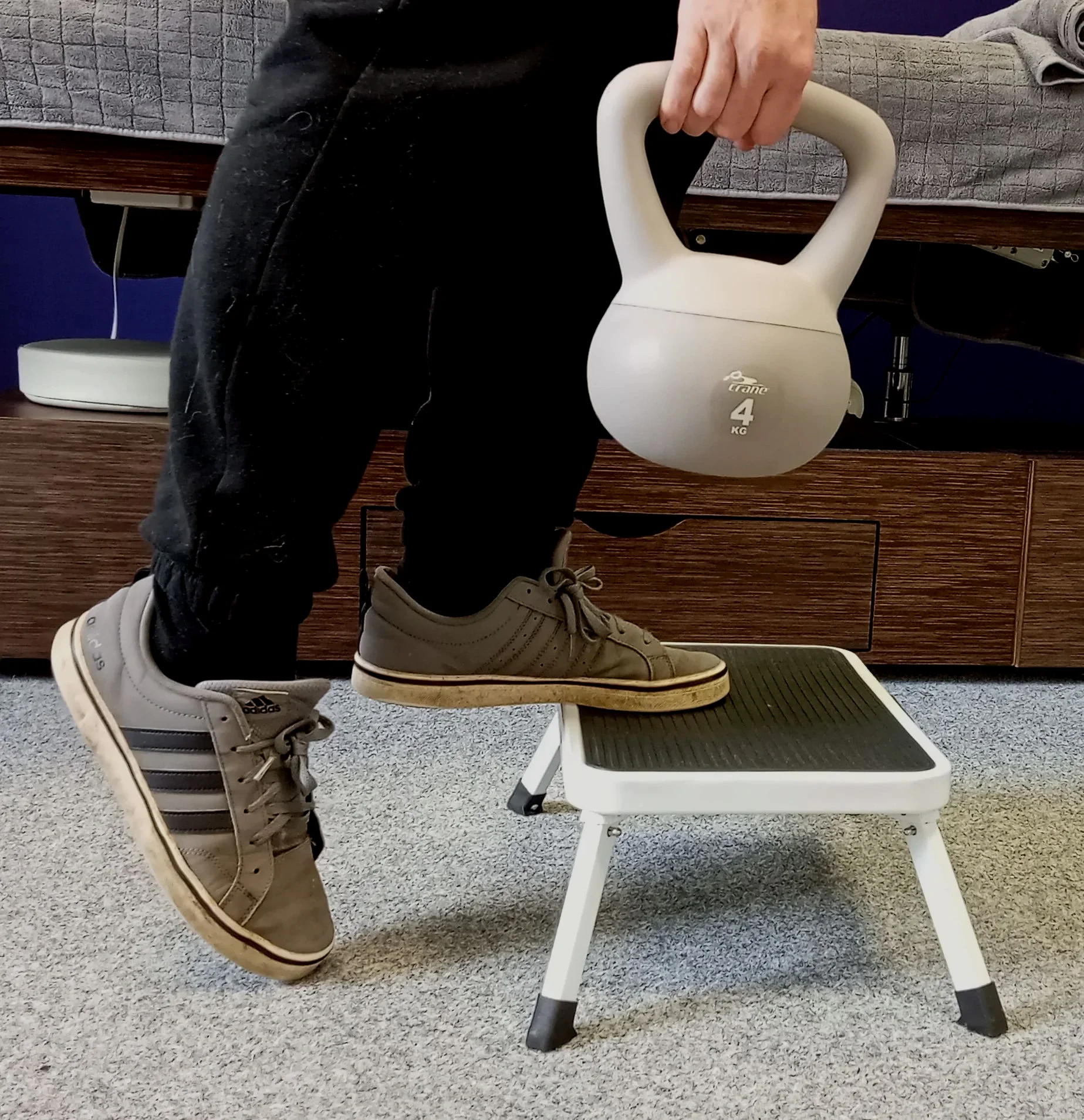
Support At Your Pace
Regain confidence after setback gently with Ross’s support
Does Low Confidence Always Change How You Move?
Not in one predictable way.
Some people slow down. Some brace or grip more firmly. Some avoid part of the movement. Others rush through it to get it over with. A person may continue doing the task while feeling very uncertain inside.
A systematic review and meta-analysis found associations between pain-related fear and some changes in movement or muscle activity, particularly in low-back-pain studies. However, the average relationships were very small and varied between people and tasks.
In ordinary language: you cannot look at one cautious movement and know exactly what somebody is thinking, what they are feeling or why they chose that strategy.
Slower is not automatically worse. Using support is not failure. Avoiding one movement for a short time is not always harmful.
Confidence becomes more relevant when caution keeps spreading, repeatedly blocks meaningful activity or leaves someone unable to judge what is safe to try.
RCMM has a separate article on back pain and movement confidence for people whose hesitation is specifically connected with bending, lifting or other back-related tasks.
Protection Is Not the Enemy
It is easy to turn confidence into another instruction:
“You just need to trust your body.”
That is not always helpful.
Protection can be sensible after an acute injury, during a medical problem or when a task genuinely exceeds someone’s current ability. The aim is not to ignore warning signs, force a movement or prove toughness.
The aim is to make the next decision clearer.
That may mean getting an assessment. It may mean adapting the task. It may mean trying a smaller version and seeing how it responds. It may also mean deciding that today is not the right day to progress.
Confidence is not pretending there is no risk. It is having enough information and experience to make a proportionate choice.
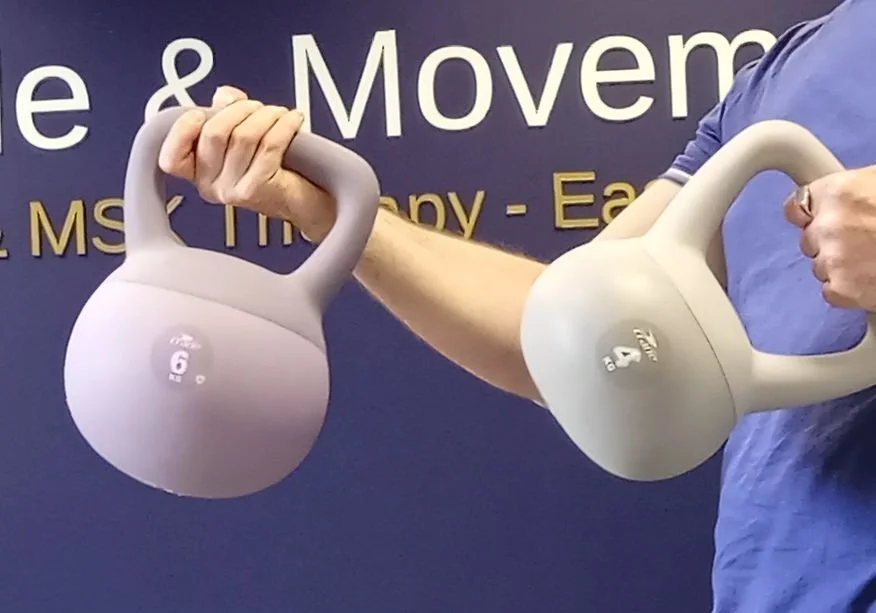
How Can You Rebuild Movement Confidence?
There is no single exercise that restores confidence for every person.
Evidence around self-efficacy and fear of movement points towards a more practical idea: confidence can change when people have manageable opportunities to take part, learn from the response and build on successful experience.
A systematic review of self-efficacy in chronic musculoskeletal pain found promising associations with physical function and activity participation, although the authors rated the overall evidence as low quality.
The steps below are general education, not an individual plan.
1. Name the Exact Task
“I want to move better” is difficult to practise.
“I want to carry a small basket from the bedroom to the landing” is clearer.
Choose the activity that matters rather than starting with a vague goal or a body-part label. Confidence may be high for one task and low for another, so precision helps.
2. Clarify Whether the Task Is Appropriate to Try
If symptoms are new, worsening, linked with significant injury or have never been properly assessed, clarification comes before progression.
If the task has already been judged appropriate, make sure you understand any genuine restrictions and what response is expected. Avoid inventing extra rules “just in case”.
There is an important difference between sensible guidance and living inside a growing list of movements you have been told never to do.
3. Make the Task Manageable, Not Meaningless
Reduce enough of the challenge that you can practise with attention and control, while keeping the task recognisable.
For carrying a washing basket, that might mean:
using a smaller load;
carrying it a shorter distance;
choosing a basket that does not block your view;
practising on level ground before adding stairs;
doing the task when you are not rushed.
The easiest possible movement is not always the most useful. The starting point should still connect with what you want to regain.
4. Choose a Version You Can Repeat
One heroic attempt may prove that you can get through the task. It does not always build trust in doing it again.
A more useful starting point is something manageable enough to repeat with a reasonably predictable response.
This is where pacing can help. It sits between doing nothing and repeatedly doing far more than you can currently recover from. The Scottish Government’s 2026–2029 chronic-pain improvement guide also describes gradual, individually paced activity as a way to support participation and confidence.
5. Change One Part at a Time
A task can become harder through load, range, speed, duration, surface, distraction or repetition.
Progressing all of them at once makes it difficult to know what changed.
If a lighter basket feels manageable, the next step might be a little more weight or a longer carry. It does not need to be more weight, more distance and a flight of stairs on the same day.
Small does not mean pointless. It means you can see what your body is responding to.
6. Track Function as Well as Symptoms
Pain and discomfort matter, but they are not the only signs of progress.
You might also notice:
less hesitation before starting;
less need to rehearse the movement in your head;
a task taking less effort;
more consistent participation;
a more predictable response afterwards;
recovering more quickly;
returning to an activity you had stopped doing.
The goal is not to award yourself a perfect score every day.
It is to notice whether life is opening back up.
What Does Not Reliably Build Confidence?
Some approaches can create a short burst of reassurance without changing the underlying uncertainty.
Be cautious about relying on:
forcing yourself through a task to prove you can;
waiting for every sensation to disappear before doing anything;
searching for one perfect technique that guarantees safety;
testing the hardest version on a good day, then avoiding it after a setback;
depending on passive treatment without returning to the task;
treating confidence as a motivation problem or a character flaw.
Confidence is not a speech you give yourself.
It is usually built from evidence you can use: I understand the task, I have an appropriate starting point, I know what happened last time, and I know what I will change next.
Where Can Massage and Hands-On Support Fit?
Hands-on treatment may help an area feel more comfortable, less sore or easier to move for some people. That can create a useful opportunity to revisit a movement that has felt difficult.
But massage cannot, by itself, establish why confidence changed or prove that a task is medically safe. It also does not replace the repeated, task-specific experience involved in rebuilding confidence.
A systematic review of manual therapy for musculoskeletal pain found low- to very-low-certainty evidence and did not show that manual therapy was superior to other or no treatment for fear-avoidance or kinesiophobia outcomes. That does not make hands-on work pointless. It defines its role more honestly.
At RCMM, hands-on support may sit alongside conversation, movement-focused assessment, clear explanation and practical movement or strength guidance where appropriate. It is one possible part of support—not the whole explanation.
How RCMM Can Help
RC Muscle & Movement provides movement-focused musculoskeletal support in East Kilbride.
If confidence has changed around a recurring, unclear or multi-area concern, a Movement & Function Assessment is usually the clearest starting point.
The session may include:
discussing the task that has become difficult or uncertain;
looking at what changed and how it affects everyday function;
exploring relevant movement in a manageable way;
hands-on support where appropriate;
practical movement or strength guidance within scope;
agreeing a realistic next step.
The aim is not to convince you that everything is fine without checking.
It is to help separate what needs more assessment from what may be approached more clearly and progressively.
If you already know the area you want focused hands-on support for, Sports Massage may be more appropriate. The RCMM appointment guide compares the different starting points without asking you to diagnose the problem yourself.
When Another Type of Assessment Comes First
Movement confidence is not the right explanation for every change in activity.
Seek appropriate medical advice when reduced confidence is linked with:
a significant or recent injury;
new, severe or rapidly worsening symptoms;
new or progressive weakness, numbness or loss of coordination;
sudden dizziness, fainting, repeated falls or a sudden change in balance;
feeling systemically unwell, including unexplained fever;
symptoms that are increasingly affecting normal daily function and have not been assessed.
In Scotland, contact your GP or NHS 24 on 111 if you are unsure what level of care is appropriate. Use emergency services for severe or life-threatening symptoms.
Key Takeaways
Movement confidence is how able and willing you feel to perform a particular movement or task.
It is related to self-efficacy and fear of movement, but it is not a diagnosis.
Confidence can change after pain, injury, a setback, confusing advice or time away from a task.
Low confidence does not prove damage, and high confidence does not prove readiness for every demand.
Protection and adaptation can be sensible. They become worth exploring when uncertainty repeatedly closes down meaningful activity.
Confidence usually grows through clear information, an appropriate starting point and manageable repeated experience.
Hands-on treatment may support comfort, but it should not be presented as a stand-alone way to rebuild movement confidence.
New, severe or worsening symptoms need appropriate assessment before confidence-building advice.
FAQs
What is movement confidence?
Movement confidence is how capable, prepared and willing you feel to perform a particular movement or everyday task. It can vary between activities and situations.
Is movement confidence the same as fear of movement?
No. The ideas can overlap, but they are not identical. Someone may feel uncertain about one task without experiencing pronounced fear. Fear of movement more specifically involves concern that activity may cause pain, injury or harm.
Can pain reduce confidence in movement?
Yes. A painful or difficult experience can make someone more cautious the next time. That response may be protective and understandable. If the uncertainty continues, it may be useful to clarify what is safe and identify a manageable route back to the task.
Does rebuilding confidence mean pushing through pain?
No. It means making a proportionate decision based on the task, symptoms, context and any relevant professional advice. A manageable step is different from forcing the hardest version or ignoring warning signs.
Can massage improve movement confidence?
Massage may help an area feel more comfortable and create an opportunity to move. However, it cannot by itself explain why confidence changed, establish medical safety or replace gradual task-specific experience.
How long does movement confidence take to rebuild?
There is no fixed timeline. It depends on the task, what changed, the person’s health and experience, and whether symptoms or an injury need assessment. Progress is often easier to judge through repeated function than one symptom-free attempt.
When should I get help?
Seek support if uncertainty repeatedly stops you doing normal tasks, you do not know what is appropriate to try, or symptoms are recurring or unclear.
Medical assessment comes first for significant injury, new or worsening symptoms, progressive weakness or numbness, sudden balance changes or feeling unwell.
Professionally Reviewed by Ross Canning, Sports Therapist
Ross reviewed this article for accuracy, professional scope and practical relevance. RCMM’s educational content does not replace medical diagnosis or individual healthcare advice.
Source Base Used
World Health Organization — Musculoskeletal Health. Used for the connection between MSK health, function and participation.
International Association for the Study of Pain — Revised Definition of Pain. Used for pain as a personal experience influenced by biological, psychological and social factors, and for the importance of respecting a person’s report.
International Association for the Study of Pain — Fear Avoidance and Musculoskeletal Pain. Used for the distinction between adaptive protection and excessive or prolonged avoidance, and for graded activity and exposure principles.
Leeuw M et al. The Fear-Avoidance Model of Musculoskeletal Pain. Used for the scientific model connecting pain-related fear, avoidance and disability, with care not to treat the model as a universal explanation.
Martinez-Calderon J et al. The Role of Self-Efficacy on the Prognosis of Chronic Musculoskeletal Pain. Used for the relationship between self-efficacy, physical functioning and activity participation, while noting the low quality of the available prognostic evidence.
Christe G et al. Psychological Factors and Spinal Motor Behaviour in Low Back Pain. Used to avoid deterministic claims about fear, movement style and muscle activity; the review found statistically significant but very small average associations.
Kamonseki DH et al. Effects of Manual Therapy on Fear-Avoidance, Kinesiophobia and Pain Catastrophizing. Used to define the limited evidence for manual therapy as a stand-alone way to change fear-related outcomes.
Scottish Government — Quality Prescribing for Chronic Pain: Guide for Improvement 2026–2029. Used for person-centred activity, pacing, manageable movement and gradual return to usual activities.
NICE NG193 — Chronic Pain: Assessment and Management. Used for person-centred assessment, meaningful activity and appropriately supported exercise in chronic primary pain.
NHS — 10 Ways to Reduce Pain. Used for the acknowledgement that hesitation around activity is common and for the general principle of becoming more active gradually.