Why Movement Can Feel Harder Some Days Than Others
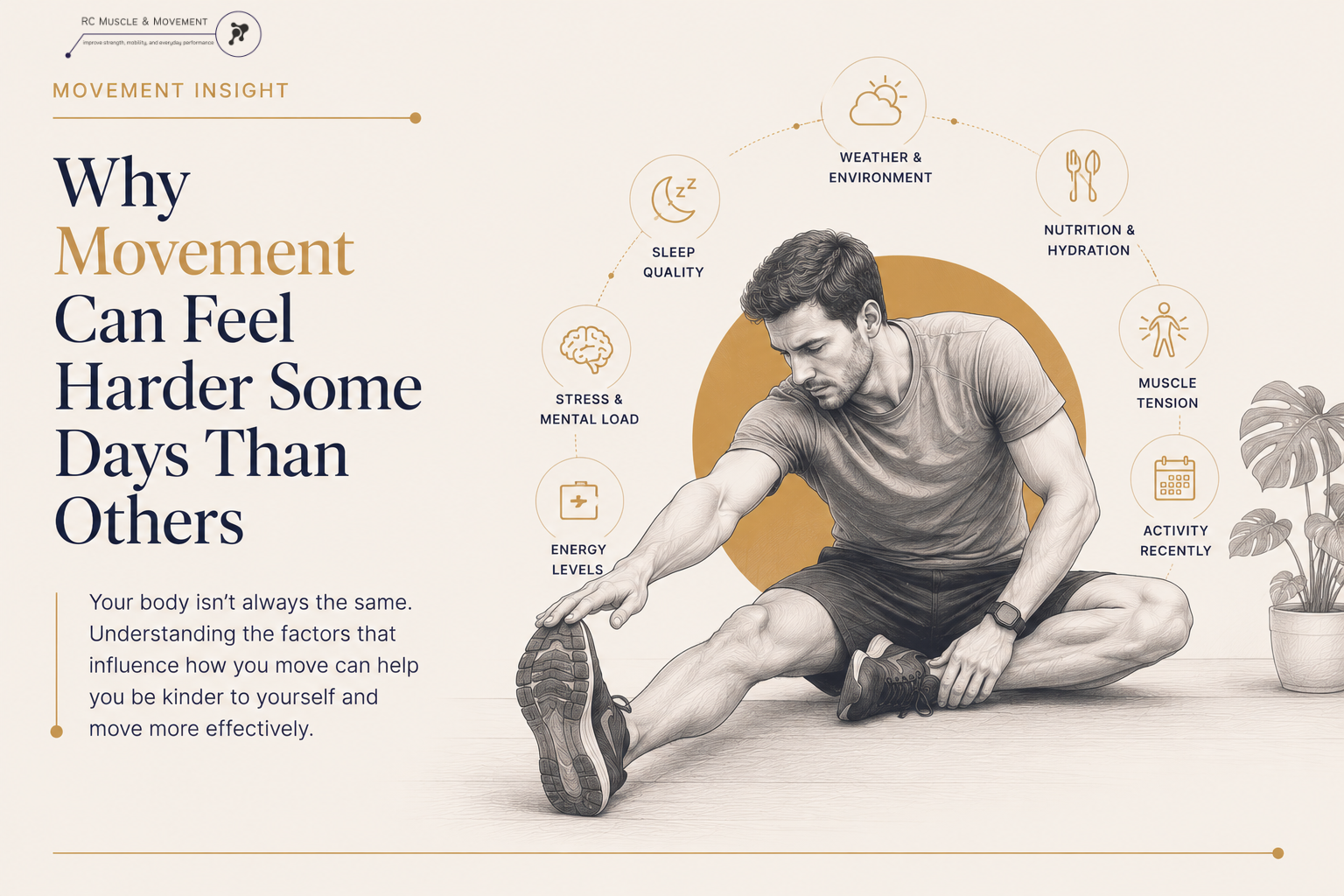
Movement can feel harder on some days because your body is responding to several things at once: sleep, stress, activity levels, recovery, sitting time, workload and recent movement habits. This does not automatically mean something is wrong. Often, it reflects how your body is coping with the demands placed on it.
Why Does Movement Sometimes Feel Different?
Most people have noticed this.
One day you walk upstairs without thinking about it.
The next day your legs feel heavy.
Your hips feel stiffer.
Your back feels tighter.
The same walk feels harder than it did a few days ago.
This can be frustrating because there is often no obvious reason why.
Nothing happened.
You did not suddenly become weak.
You did not necessarily injure yourself.
Yet movement feels different.
The reason is usually that movement is influenced by more than muscles and joints alone.
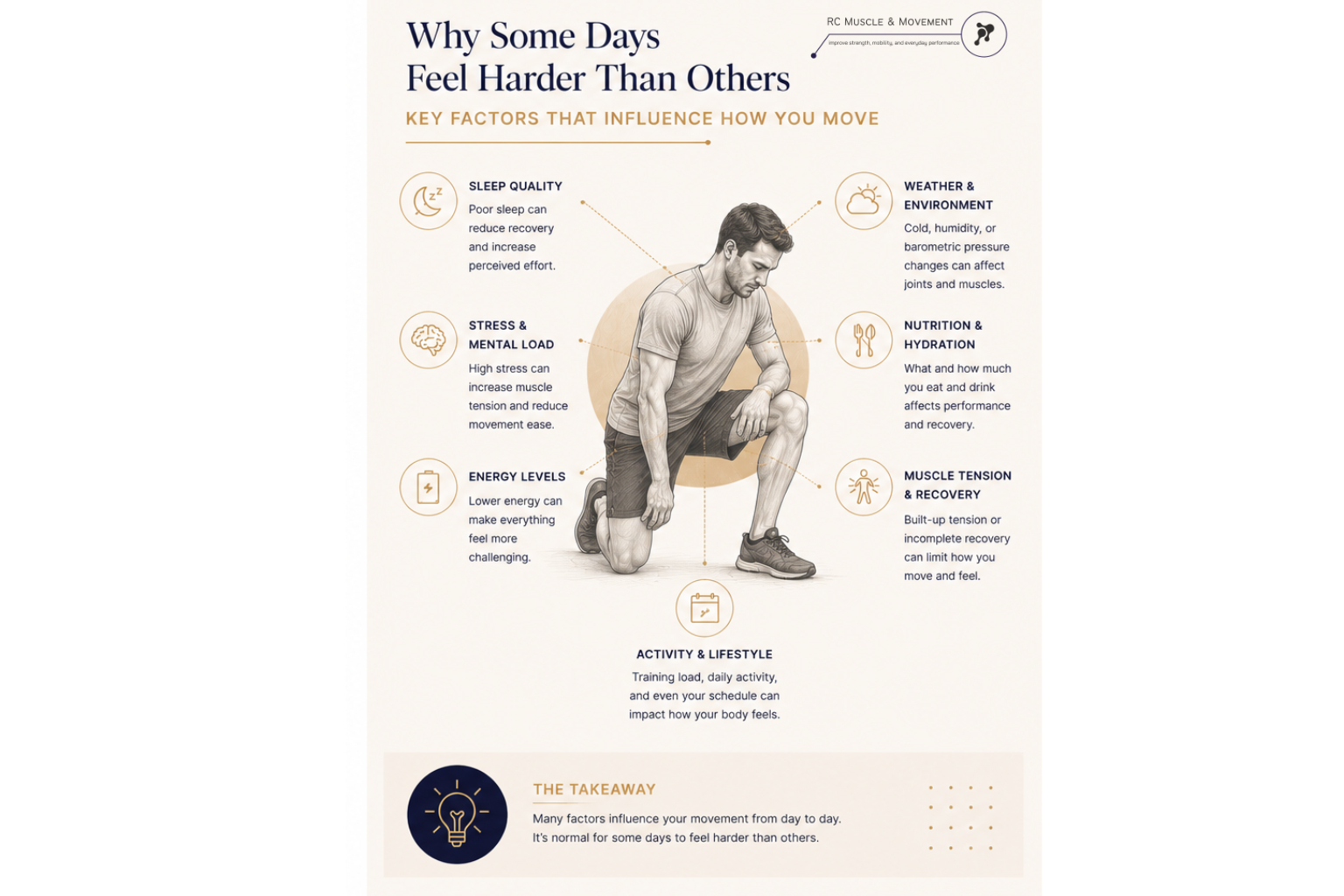
How your body feels on any given day can be shaped by:
sleep
stress
recovery
workload
sitting time
activity levels
movement variety
recent physical demands
overall health
Because these factors change, movement can change too.
That does not mean your body is fragile.
It means your body is responsive.
Your Body Is Always Responding To Demand
Your body is constantly adapting to what life asks from it.
When activity increases, your body responds.
When activity drops, your body responds.
When work becomes busier, your body responds.
When recovery improves, your body responds.
This is normal.
The problem is that people often interpret every change as a warning sign.
For example:
“I feel stiffer today, so something must be wrong.”
Sometimes that is not the case.
A busy week, less sleep, more sitting, increased stress or reduced movement variety can all affect how movement feels without meaning there is damage or injury.
Understanding this can make those day-to-day changes feel less confusing.
It also helps people avoid chasing one single cause when the bigger picture matters more.
Many of these changes first show up in everyday tasks rather than exercise. If you’ve noticed movement feeling heavier, stiffer or less comfortable during daily life, our Everyday Movement Support page explores this in more detail.
Recovery Matters To Everyone
Recovery is often talked about in sport.
But recovery matters to normal life too.
You do not need to be an athlete for your body to respond to workload and recovery.
Whether your day involves desk work, standing, commuting, parenting, training, lifting, walking or caring responsibilities, your body is constantly balancing effort and recovery.
When recovery is limited, people may notice:
increased stiffness
reduced movement comfort
heavier legs
more tension
lower energy
slower recovery from activity
less confidence moving normally
Recovery is influenced by:
sleep
stress
workload
nutrition
hydration
movement habits
general health
overall activity levels
Small changes across a few of these areas can add up.
That is why movement can feel noticeably harder even when no single thing seems dramatic.
Why Yesterday Felt Fine But Today Does Not
This is one of the most useful things to understand.
Physical comfort is often affected by accumulation.
One poor night of sleep may not change much.
One stressful day may not change much.
One long sitting day may not change much.
But several small things together can make a noticeable difference.
For example:
slightly less sleep
more time sitting
higher stress
less movement
more physical demand
less recovery than usual
Individually, each factor may seem minor.
Together, they can affect how comfortable, capable and adaptable your body feels.
This is often why someone can wake up feeling stiff or physically heavier without being able to point to one clear cause.
Sleep Can Affect How Movement Feels
Sleep is not just about feeling tired.
It can influence how the body recovers, how sensitive things feel, and how well people cope with physical demand.
Research looking at sleep and pain has found a strong relationship between poor sleep and pain experiences, with sleep problems linked to increased risk or worsening of pain in several studies. (PMC)
In everyday terms, this means a poor night’s sleep can make normal movement feel harder.
You may notice:
more stiffness
more tension
reduced energy
less patience with discomfort
heavier movement
lower confidence in normal tasks
This does not mean poor sleep is the only cause.
It means sleep is part of the bigger picture.
Stress Can Show Up Physically
Stress is often thought of as mental or emotional.
But stress can also affect the body.
The NHS lists muscle tension or pain among the physical symptoms of stress. (nhs.uk)
This matters because many people notice movement feels harder during stressful periods.
They may feel:
tighter through the neck or shoulders
heavier through the back
more physically tired
less relaxed when moving
more sensitive to normal workload
Stress does not explain everything.
But it can influence how your body responds to everyday movement and physical demand.
A physically demanding week during a calm, well-rested period may feel very different from the same workload during a stressful, low-recovery week.
Movement Variety Matters
The body generally responds well to variety.
That does not mean constant stretching.
It means not asking the same areas to do the same thing for long periods without change.
Movement can become repetitive through:
desk work
driving
standing work
repetitive lifting
sitting for long periods
reduced activity
changes in routine
always moving in the same way
Research on motor variability describes natural variation in posture, movement and muscle activity as part of how people perform tasks. It also highlights why variation matters in occupational health and repetitive work settings. (PubMed)
In plain English:
Your body usually feels better when it has options.
When movement options reduce, certain areas may start doing more work than they need to.
Over time, movement may feel:
stiffer
heavier
tighter
less smooth
less comfortable
harder than usual
This does not automatically mean something is wrong.
It may simply mean your body has had less variety than it needs.
If movement has been feeling consistently harder, stiffer or less comfortable than usual, a Movement & Function Assessment can help build a clearer picture of what may be contributing.
Sitting Time Can Add To The Picture
Sitting is not bad by itself.
But long periods of sitting can reduce movement variety.
The NHS physical activity guidance for adults recommends reducing time spent sitting or lying down and breaking up long periods of not moving with some activity. (nhs.uk)
This fits what many people notice in real life.
After sitting for a long time, movement can feel:
stiff
slow
heavy
restricted
less comfortable at first
That does not mean sitting has damaged anything.
It often means your body has spent a long time in one position and needs time to move again.
A short walk, a few position changes, or simply breaking up the sitting time can often make movement feel more manageable.
Why Some Days Feel Easier Than Others
Physical comfort rarely follows a straight line.
Some days feel better.
Some days feel harder.
You may notice movement feels easier when:
you have slept well
stress is lower
recovery has been good
you have moved regularly
activity levels are balanced
your workload feels manageable
You may notice movement feels harder when:
you are tired
work is busy
stress is higher
recovery is limited
you have sat for longer
physical demands have increased
movement variety has reduced
These changes are often part of being human.
The goal is not to make every day feel exactly the same.
The goal is to understand what may be influencing how your body feels.
What This Means For Everyday Life
Most people are not trying to move perfectly.
They simply want their body to feel:
comfortable
capable
adaptable
reliable
Understanding that movement can fluctuate helps create more realistic expectations.
Instead of asking:
“What is the one thing wrong with me?”
it can be more useful to ask:
How have I been sleeping?
Has work been more demanding?
Have I been sitting more than usual?
Has stress increased?
Has my activity level changed?
Have I had enough recovery?
Have I been moving in the same way most days?
Often, the answer is not one single factor.
It is the combination.
Physical Activity Helps Keep The Body Adaptable
The World Health Organization recommends regular physical activity and reducing sedentary behaviour across age groups. Its 2020 guidelines also include muscle-strengthening activity as part of health-supporting movement. (World Health Organization)
The NHS adult physical activity guidance similarly recommends regular activity, strengthening activities for major muscle groups, and breaking up long periods of inactivity. (nhs.uk)
For RCMM, this fits the strength-informed part of our approach.
Not gym pressure.
Not performance culture.
Just the idea that bodies generally cope better when they are gradually exposed to movement, load and variety.
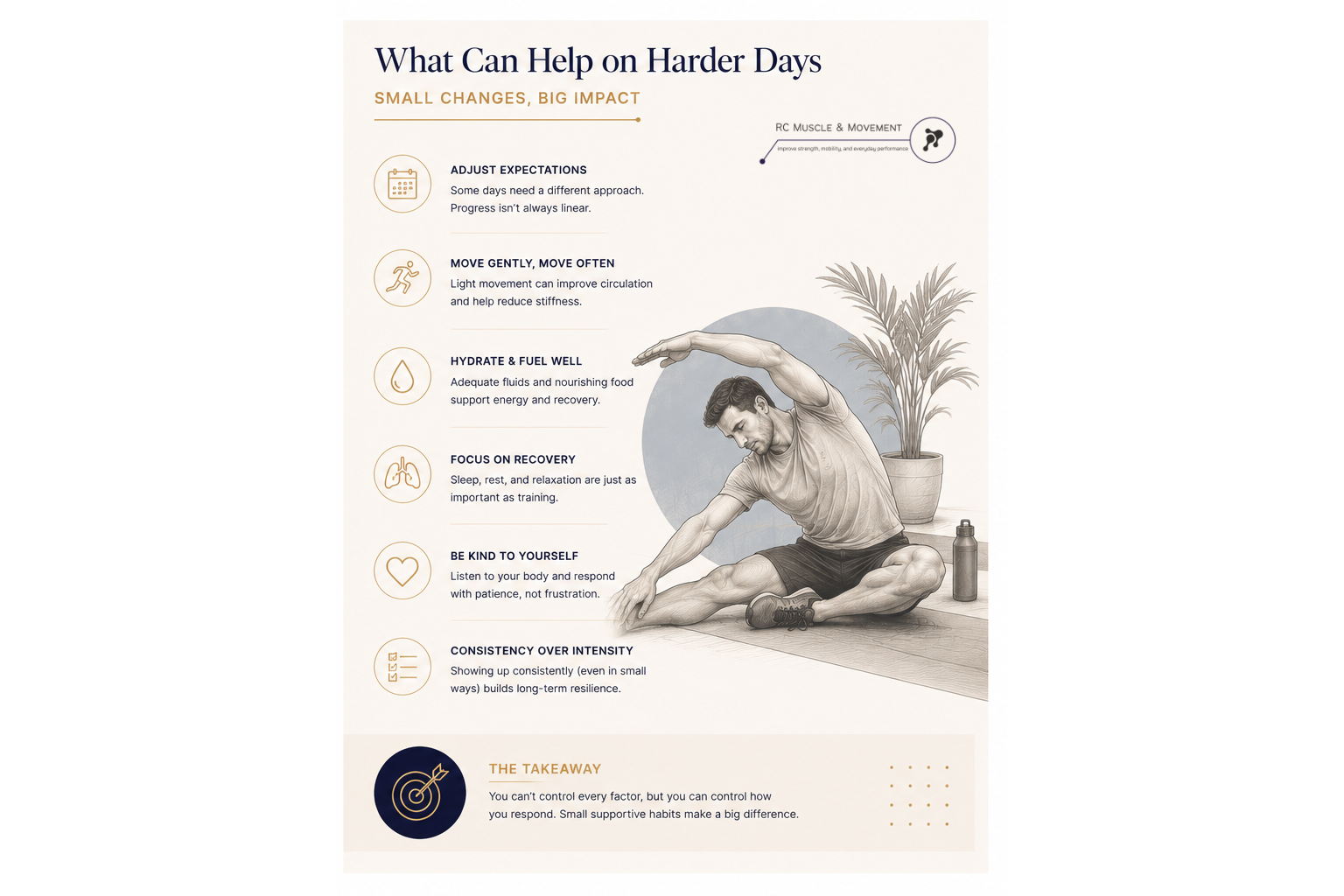
That might look like:
walking regularly
getting up from a chair with confidence
carrying shopping
taking stairs
lifting safely at work or home
building strength gradually
moving in more than one position each day
The aim is not perfection.
The aim is helping movement feel more manageable, capable and easier to trust.
Key Takeaways
Movement can feel harder when:
recovery is reduced
sleep quality is lower
stress levels are higher
activity levels change
movement variety decreases
sitting time increases
physical demands build up
This does not automatically mean something is wrong.
Often, it reflects how your body is responding to what life has recently asked from it.
Understanding these influences can make movement feel less confusing and easier to work with.
Movement First, Not Perfection
At RC Muscle & Movement, we take a movement-first approach.
The goal is not perfect posture.
It is not perfect mobility.
It is not perfect movement.
The goal is helping people better understand:
how their body responds to everyday life
what may be influencing comfort
why movement feels different some days
what practical steps may help
Sometimes the most useful first step is simply recognising that your body is responding to demand.
Not failing.
Not breaking.
Responding.
If movement has been feeling consistently harder, heavier or less comfortable than usual, a Movement & Function Assessment or sports massage may be a useful next step.
FAQs
Why do I feel stiff some days but not others?
Daily changes in sleep, stress, activity levels, sitting time, workload and recovery can all influence how movement feels. Small changes across several areas can sometimes make a noticeable difference.
Does feeling stiff mean something is wrong?
Not necessarily. Stiffness can reflect how your body is responding to recent demands, reduced movement variety or limited recovery rather than indicating a specific injury.
Can stress affect how my body feels?
Yes. Stress can show up physically, including muscle tension or pain. It can also affect sleep, energy and recovery, which may influence movement comfort.
Why does movement feel harder after sitting all day?
Long periods of sitting reduce movement variety and can leave certain areas feeling less adaptable when you begin moving again. Breaking up sitting time with movement can help.
Is it normal for movement to fluctuate?
Yes. Most people experience natural changes in comfort, energy and movement capacity from day to day.
When should I seek support?
If movement consistently feels harder, more uncomfortable or starts affecting everyday life, professional support may help you understand what may be contributing and what type of support fits best.
Source Base Used
World Health Organization. WHO Guidelines on Physical Activity and Sedentary Behaviour (2020). Used for general guidance around regular physical activity, reducing sedentary behaviour and the role of strengthening activity. (World Health Organization)
NHS. Physical activity guidelines for adults aged 19 to 64. Used for UK guidance on regular physical activity, strengthening activity and breaking up long periods of sitting or lying down. (nhs.uk)
NHS. Get help with stress. Used for physical symptoms of stress, including muscle tension or pain. (nhs.uk)
Finan PH, Goodin BR, Smith MT. The association of sleep and pain: an update and a path forward. Used for evidence around the relationship between sleep and pain experiences. (PMC)
Dzakpasu FQS et al. Musculoskeletal pain and sedentary behaviour in occupational and non-occupational settings: a systematic review with meta-analysis. Used for wider context around sedentary behaviour and musculoskeletal pain. (Springer Link)
Srinivasan D, Mathiassen SE. Motor variability in occupational health and performance. Used for context around movement variability, repetitive work and occupational movement exposure. (PubMed)