Why Knee Pain Feels Worse After Long Days on Your Feet
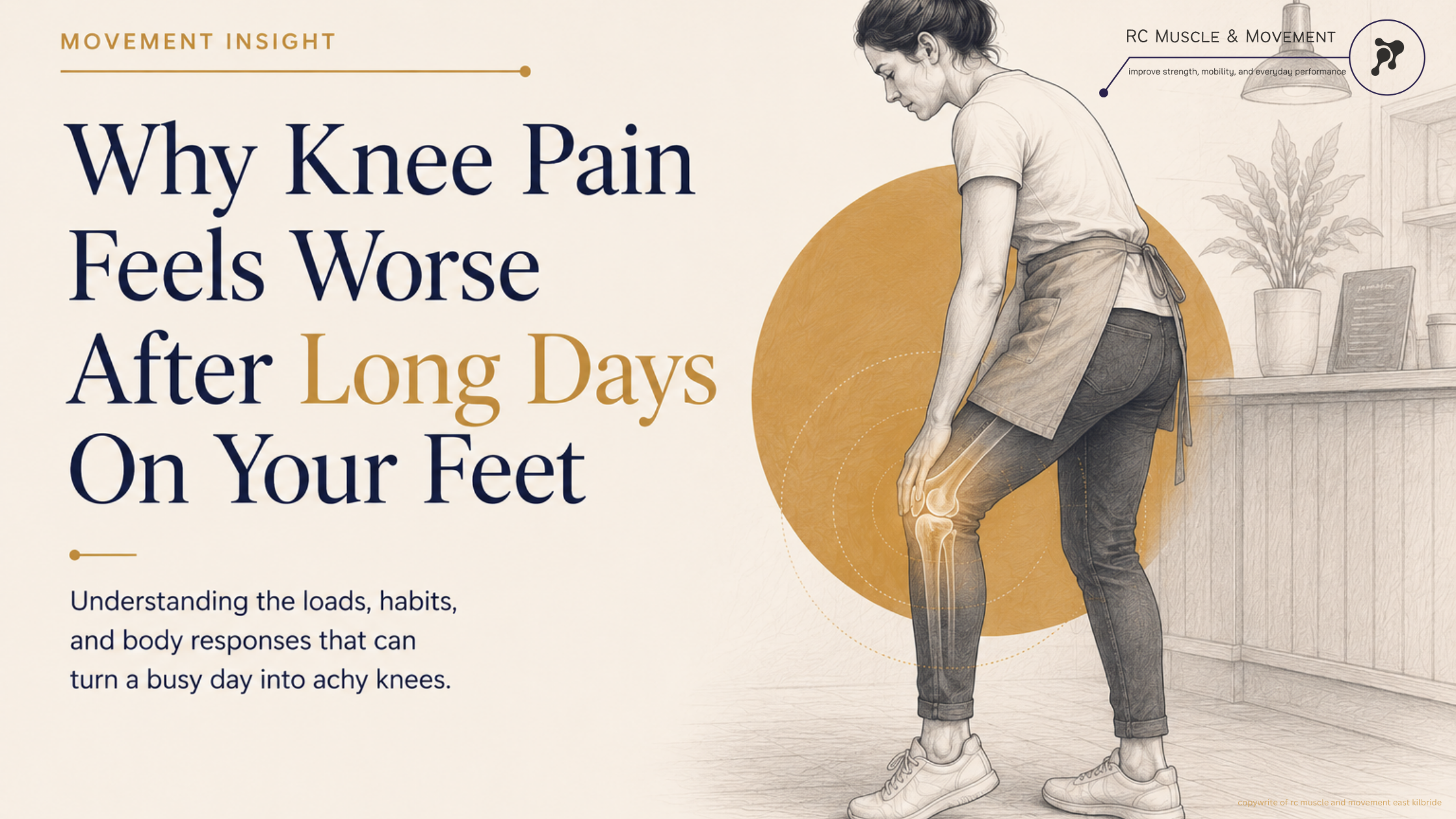
Featured Snippet Summary
Knee pain can feel worse after long days on your feet because standing, walking slowly, carrying weight and fatigue all change how the body shares effort. The hips, knees, ankles and feet work together during everyday movement. When one area becomes tired or overloaded, the knee may feel more sensitive by the end of the day. This does not automatically mean something is damaged, but recurring or worsening knee pain should be assessed properly.
Educational Note
This article is for general education only.
It is not medical advice and it is not a diagnosis.
RC Muscle & Movement does not diagnose knee injuries, joint disease or medical conditions. We provide movement-focused assessment, hands-on soft-tissue support and practical guidance within sports therapy scope. Learn more abouton our movement led msk support page
If knee pain is severe, new, worsening, linked with swelling, heat, redness, locking, giving way, inability to bear weight, numbness, fever, or follows a significant injury, it is sensible to seek appropriate medical advice.
Why This Pattern Is So Common
Knee discomfort that builds across a long day is something many people notice.
It may happen after:
a long shift
walking around shops
standing at work
travelling
a day out
housework
childcare
teaching
nursing
retail work
trade work
standing at events
being on harder floors than usual
The knee may feel fine at the start of the day.
Then by the afternoon or evening it starts to feel:
heavy
stiff
achy
tight around the front or sides
tired
more noticeable on stairs
less comfortable when standing still
harder to trust when walking home
That can feel frustrating because nothing dramatic happened.
There may not have been a twist, fall or obvious injury.
The discomfort simply builds.
A useful way to understand this pattern is to look at what the knee has been asked to tolerate across the day.
Not just one movement.
The whole day.
Standing Still Is Different From Moving Freely
Standing is not bad.
Walking is not bad.
Being on your feet is not automatically harmful.
But long periods on your feet can become demanding because the body has to manage load for hours at a time.
There is also a difference between moving freely and being stuck in similar positions.
Walking naturally gives the body variety.
Each step changes:
hip position
knee angle
ankle movement
foot contact
muscle activity
weight shift
balance demand
Standing still is different.
The body has fewer chances to redistribute effort.
The knees may stay in a similar position for longer.
The feet may stay planted.
The hips and ankles may not move through as much variety.
The muscles may work at a low level for a long time.
That low-level work can still become tiring.
This is one reason people often feel worse after standing around than after moving more freely.
The issue is not simply “standing”.
It is the lack of movement variety within standing.
Why The Knee Can Feel Worse At The End Of The Day
Knee discomfort often builds because the body becomes tired.
That sounds simple, but it matters.
Fatigue changes how people move.
When the body is fresh, movement usually feels more automatic.
As the day goes on, small changes can appear.
You may:
lock your knees more often
lean into one hip
walk more slowly
take smaller steps
rely more on one side
avoid bending the knee fully
become less springy through the feet and ankles
carry bags on one side
use stairs more cautiously
stand with less movement variety
None of those changes are automatically wrong.
They are simply ways the body manages tiredness.
But they can alter where effort goes.
By the end of a long day, the knee may feel as though it has done more than its fair share.
This does not automatically mean the knee is damaged.
It may mean the knee has become more sensitive to the amount of work, repetition and fatigue it has been dealing with.
If knee discomfort is the main issue you are noticing, our Knee Pain page explains how RCMM supports people dealing with knee discomfort during everyday movement.
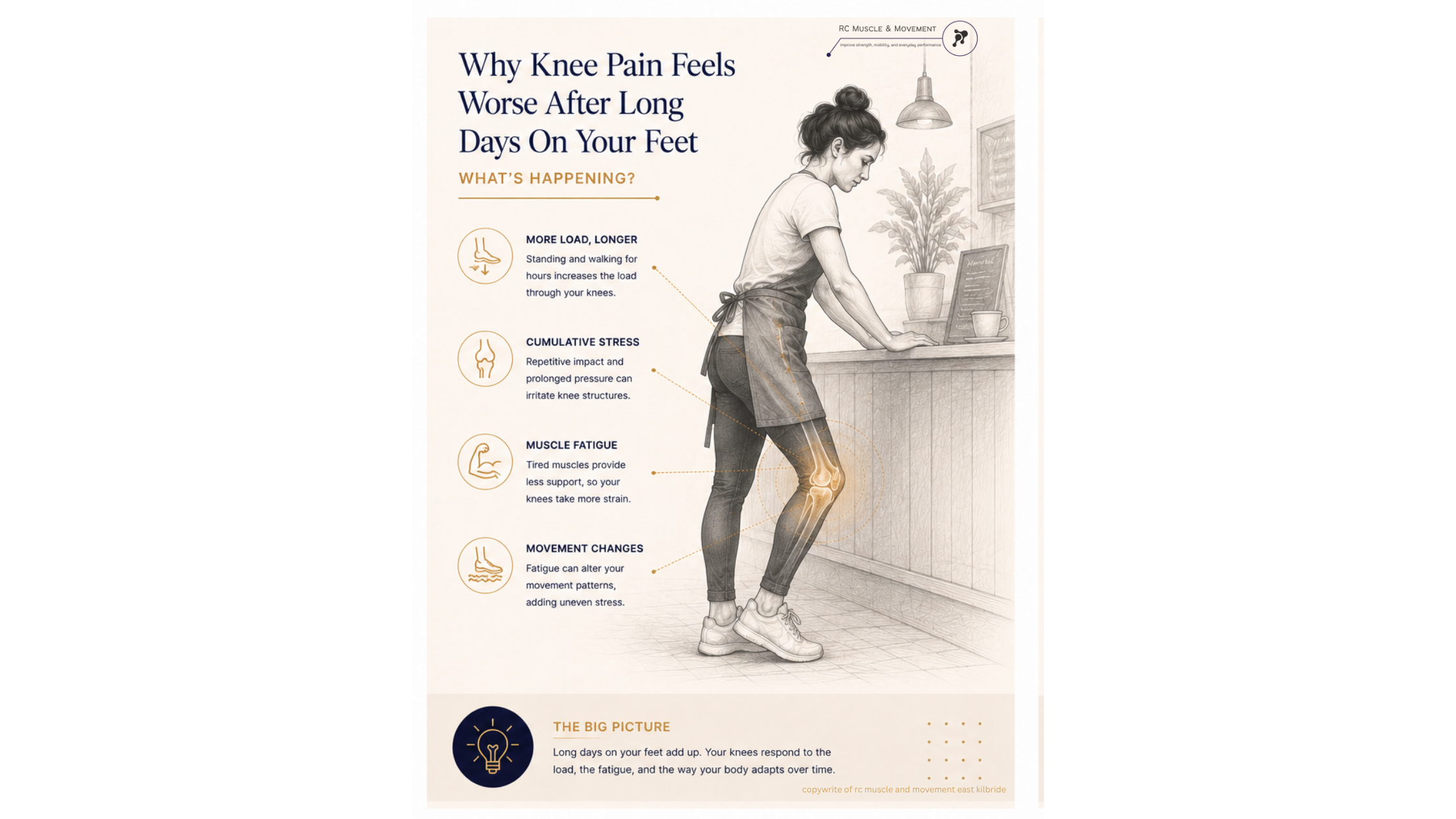
The Knee Does Not Work Alone
The knee sits between the hip, ankle and foot.
That means it rarely works in isolation.
During walking, standing, stairs and everyday movement, the body shares effort across several areas:
hips help generate and control movement
knees guide and absorb load
ankles help with movement and balance
feet adapt to the floor
trunk position influences how load travels through the legs
When this sharing works well, the knee is not left doing everything.
When the body becomes tired, stiff, rushed or overloaded, the sharing can change.
The knee may then feel more pressure, more effort or more sensitivity.
This is one reason knee discomfort can sometimes be linked to:
hip tightness
glute fatigue
ankle stiffness
foot discomfort
footwear changes
hard floors
walking speed
carrying bags
standing habits
long work shifts
That does not mean the knee is not important.
It means the knee is part of a wider movement system.
Slow Walking Can Be Surprisingly Tiring
Many people assume walking slowly is easier.
Sometimes it is.
But slow walking, stop-start walking and standing in queues can feel worse for some knees than walking at a natural pace.
This can happen during:
shopping
museums
events
school trips
busy work shifts
days out
airports
slow walking with children
moving around a workplace without ever really striding
Slow walking can reduce momentum.
The body may spend more time controlling each position.
The knee may feel like it is doing more holding and less flowing.
This is why someone may feel better on a normal walk than they do after three hours of slow shopping.
It is not only about distance.
It is also about pace, pauses, surfaces, footwear, load and fatigue.
Hard Floors, Footwear And Surface Changes
The surface under your feet can change how your legs feel.
Hard floors are common in:
retail
hospitality
healthcare
schools
warehouses
kitchens
clinics
supermarkets
shopping centres
Standing or walking on hard surfaces for long periods may feel more demanding than walking outdoors or moving between different surfaces.
Footwear can also matter.
This does not mean there is one perfect shoe.
But if shoes are worn out, too flat, too unstable, too rigid or simply not suited to the day’s demands, the feet and legs may fatigue sooner.
When the feet and ankles become tired, the knee may become more aware of load.
Again, this is not about blaming one thing.
It is about understanding the whole context.
A long day on hard floors, in tired shoes, with poor sleep and lots of standing is very different from a short walk in comfortable footwear after a good night’s rest.
Why Stairs Often Feel Worse After A Long Day
Many people notice knee discomfort more on stairs after being on their feet all day.
That makes sense.
Stairs ask more from the knee than level walking.
Going up and down stairs requires more control, more bending, and more coordination between the hips, knees, ankles and feet.
When the legs are fresh, stairs may feel manageable.
When the legs are tired, stairs may feel harder.
You might notice:
the front of the knee feels more sensitive
one knee feels less confident
going downstairs feels worse than going up
the knee feels stiff after sitting down later
the legs feel heavy
you hold the handrail more than usual
This does not automatically mean the stairs caused the problem.
They may simply reveal fatigue that has built through the day.
Carrying Weight Can Change The Picture
Carrying bags, tools, shopping, children or equipment changes how the body shares effort.
The knee may feel worse when you have spent the day:
carrying shopping on one side
wearing a heavy backpack
holding a child on one hip
carrying work equipment
moving boxes
standing while holding items
walking with uneven load
One-sided carrying can make one leg work differently from the other.
Carrying extra weight can also increase the overall demand on the hips, knees, ankles and feet.
This is not necessarily a problem.
The body is designed to carry things.
But if the load is more than you are used to, or the day is already physically demanding, the knee may feel more sensitive by the end.
Why Rest Helps, But Does Not Always Solve It
Many people feel better after sitting down or sleeping overnight.
That is useful information.
It suggests the knee may be responding to load and fatigue.
But if the same pattern keeps returning every time you have a long day on your feet, rest may only be helping temporarily.
The bigger question becomes:
“Why does this amount of standing or walking keep exceeding what the knee feels comfortable with?”
Possible contributors may include:
sudden increase in time on feet
reduced strength or capacity
limited movement variety
repeated standing positions
hard floors
unsuitable footwear
hip, ankle or foot contribution
work demands
poor recovery
stress and fatigue
previous habits around avoiding movement
The answer is rarely one single thing.
Most of the time, it is a combination.
If knee discomfort keeps returning after long days on your feet, a Movement & Function Assessment can help build a clearer picture of how your hips, knees, ankles and feet are sharing effort.
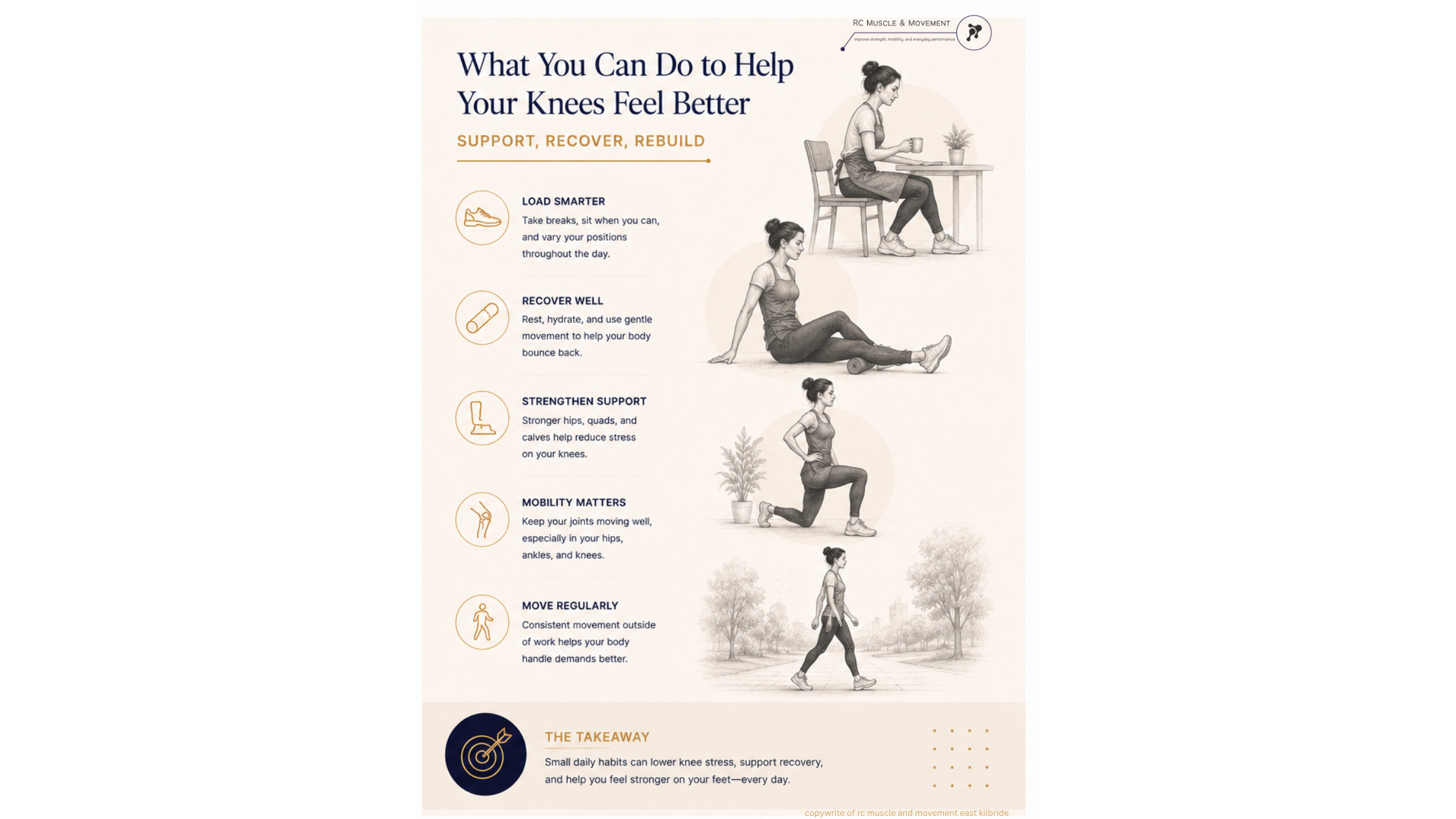
What May Help During Long Days On Your Feet
This is general guidance, not treatment advice.
The aim is not to find one perfect posture or one perfect way to stand.
The aim is to give the body more options.
Useful ideas may include:
changing position before discomfort builds
shifting weight from side to side
taking short walking breaks
using stairs or steps gradually rather than rushing
changing pace where possible
alternating tasks when you can
wearing footwear that suits the day’s demands
avoiding standing completely still for long periods
sharing carried loads between both sides
sitting briefly before the knee becomes very irritated
building lower-body strength gradually over time
Small changes can matter.
For example, thirty seconds of walking, a few gentle knee bends, changing foot position, or breaking a long standing spell may help the body redistribute effort.
The goal is not to avoid standing.
The goal is to make long days easier for your body to tolerate.
Why Strength And Capacity Matter
A knee that feels worse after long days on your feet may not need only rest.
It may need more capacity.
Capacity means the body is better able to tolerate what your day asks from it.
For some people, that may involve gradually improving strength around the hips, thighs, calves, feet and trunk.
Not in a performance or gym-culture way.
In an everyday-life way.
Examples of useful capacity might include being able to:
stand longer with less fatigue
manage stairs more comfortably
walk further without the knee feeling overloaded
carry shopping more evenly
cope better with a demanding shift
recover better after busy days
feel more confident trusting the knee
Strength work should be appropriate to the person.
It does not need to be complicated.
But for recurring knee discomfort, it can be useful to think beyond short-term relief and consider what the body needs to handle future demand better.
Where Sports Massage Fits
Sports Massage may be useful when the area around the knee, thigh, hip or calf feels tight, overworked or protective.
Hands-on support may help reduce local tension and make movement feel easier.
This can be helpful after periods of increased workload, training or long days on your feet.
But Sports Massage is not about “fixing” the knee.
It is one possible support option within a wider picture.
If the issue is clear and localised, Sports Massage may be a suitable starting point.
If the discomfort keeps returning, affects confidence or seems linked to how you stand, walk, work or move, assessment may be more useful first.
When Assessment Is The Better Starting Point
A Movement & Function Assessment is usually the better starting point when:
knee discomfort keeps returning
the issue feels unclear
long days on your feet repeatedly trigger symptoms
stairs feel harder than they used to
one side feels less confident
you are unsure whether to rest, stretch, strengthen or book massage
previous approaches only helped temporarily
you want to understand the bigger picture
The assessment is not about diagnosing a knee condition.
It is about looking at how the body is moving, what your day involves, and what may be contributing to the pattern.
That helps decide whether support should focus on:
hands-on work
movement guidance
strength-informed support
workload changes
recovery habits
or signposting elsewhere if needed
The goal is clarity.
Not overcomplication.
When To Seek Medical Advice
Most everyday knee discomfort is not an emergency.
But some symptoms should be checked medically.
Seek appropriate advice if you notice:
severe pain
significant swelling
heat or redness around the knee
inability to put weight through the leg
the knee locking
the knee repeatedly giving way
fever or feeling unwell
pain after a fall or injury
numbness or unusual sensations
symptoms that are worsening or not improving
calf swelling, warmth or sudden breathlessness
This is not to create fear.
It is simply to make sure the right type of support is used at the right time.
If something appears outside the most appropriate scope for an RCMM appointment, we will explain clearly and help guide you toward the most suitable next step.
Key Takeaways
Knee pain after long days on your feet does not automatically mean something is damaged.
It may be influenced by:
long periods standing
reduced movement variety
fatigue
hard floors
footwear
slow walking
carrying weight
stairs
hip, ankle and foot contribution
recovery
overall workload
The knee matters.
But it does not work alone.
If the same pattern keeps returning, it may be useful to ask:
“What is my knee being asked to tolerate across the whole day?”
That gives a better starting point than simply blaming the knee.
How RCMM Can Help
RC Muscle & Movement is a movement-first sports massage and assessment clinic in East Kilbride.
We support people dealing with tightness, stiffness, restricted movement and areas that feel overloaded during work, training and everyday life.
For knee discomfort after long days on your feet, our role is to help you understand the pattern and decide what support may fit best.
That may include:
hands-on soft-tissue support
practical movement guidance
strength-informed support where helpful
clear explanation in everyday language
The aim is to help movement feel clearer, more comfortable and easier to trust.
If knee discomfort keeps returning after long days on your feet, the Movement & Function Assessment is usually the clearest starting point. If one specific area feels tight or overworked, Sports Massage may also be useful.
FAQs
Why do my knees hurt after standing all day?
Knees can feel more sensitive after standing all day because the body has been managing load for a long time. Fatigue, hard floors, reduced movement variety, footwear and how the hips, ankles and feet share effort can all influence how the knee feels.
Why does standing still feel worse than walking?
Standing still gives the body fewer chances to change position and redistribute effort. Walking usually creates more movement variety, which may feel better for some people.
Why does knee pain feel worse at the end of a shift?
By the end of a shift, the legs may be tired, movement may become less varied and the knee may be doing more work than it was earlier in the day.
Does knee pain after standing mean something is damaged?
Not automatically. It may reflect fatigue, workload or sensitivity. But severe, worsening, swollen, hot, unstable or injury-related knee pain should be checked medically.
Can footwear affect knee discomfort?
Footwear can influence how the feet, ankles, knees and hips share effort across a long day. There is no single perfect shoe, but worn-out or unsuitable footwear may make long standing days feel harder.
Why do stairs feel worse after being on my feet all day?
Stairs ask more from the knees, hips, ankles and feet than level walking. If the legs are already tired, stairs may reveal that fatigue more clearly.
Can Sports Massage help knee discomfort after long days?
Sports Massage may help if the surrounding muscles feel tight, overworked or protective. If the knee discomfort keeps returning or feels unclear, Movement & Function Assessment is usually the better starting point.
What should I book if my knee keeps hurting after work?
If the issue is recurring, unclear or affecting confidence, the Movement & Function Assessment is usually the clearest starting point. If you know the area that feels tight or overworked, Sports Massage may be appropriate.
Source Base Used
NHS. Knee pain.
NHS Inform. Knee problems.
NICE. Osteoarthritis in over 16s: diagnosis and management. NG226.
Waters TR, Dick RB. Evidence of health risks associated with prolonged standing at work and intervention effectiveness. Rehabilitation Nursing. 2015.
Coenen P et al. Associations of occupational standing with musculoskeletal symptoms: a systematic review with meta-analysis. British Journal of Sports Medicine. 2018.
Jo H et al. Negative impacts of prolonged standing at work on musculoskeletal symptoms and physical fatigue. Yonsei Medical Journal. 2021.
Crossley KM et al. 2018 Consensus statement on exercise therapy and physical interventions to treat patellofemoral pain. British Journal of Sports Medicine. 2018.
Bull FC et al. World Health Organization 2020 guidelines on physical activity and sedentary behaviour. British Journal of Sports Medicine. 2020.
NHS. Physical activity guidelines for adults aged 19 to 64.