Why Soft Tissue Therapy Helps When Life Makes Everything Feel Tight
Summary
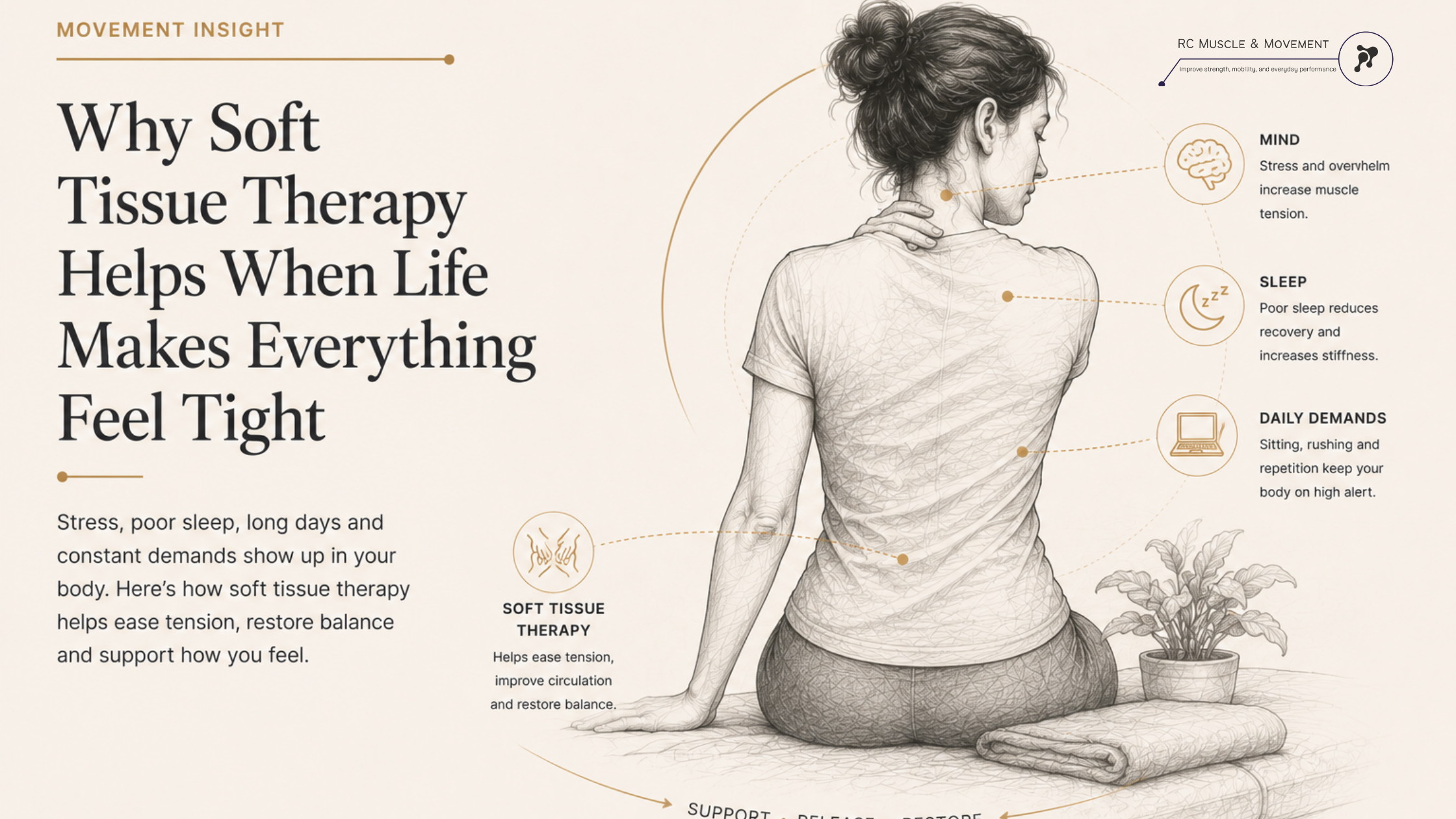
Soft tissue therapy may help when life makes everything feel tight because everyday tension is often influenced by work, stress, sitting, sleep, routine and daily load. Long periods in similar positions, busy weeks, poor recovery and high stress can make the body feel tense, heavy or restricted. Soft tissue therapy does not “fix” modern life, but it may help the body feel more comfortable, settled and easier to move.
Educational Note
This article is for general education only.
It is not medical advice and it is not a diagnosis.
RC Muscle & Movement does not diagnose injuries or medical conditions. We provide movement-focused assessment, hands-on soft-tissue and musculoskeletal support and practical guidance within sports therapy and strength-coaching scope.
If pain is severe, new, worsening, linked with numbness, weakness, swelling, loss of control, unexplained symptoms, fever, recent trauma, chest pain, or other concerning changes, it is sensible to seek appropriate medical advice.
Modern Life Can Make The Body Feel Tight
Most people think tightness comes from one obvious thing.
Bad posture.
A tight muscle.
A hard workout.
Sleeping awkwardly.
Sometimes there is a clear trigger.
But often, people feel tense or stiff because several normal life demands have built up together.
A busy week at work.
More time sitting.
Less movement than usual.
Poor sleep.
Stress.
Driving.
Housework.
Looking after family.
Standing for long periods.
Doing the same positions and tasks again and again.
None of these things are automatically bad.
But together, they can leave the body feeling physically loaded.
That is why someone may say:
“I just feel tight everywhere.”
“My shoulders are always tense.”
“My back feels stiff even though I haven’t done anything.”
“My body feels heavy by the end of the week.”
This does not automatically mean something is injured.
It may mean the body has been living inside a week with more demand than recovery.
Tightness Is Not Always About One Muscle
When everything feels tight, it is tempting to search for one muscle to blame.
But general tension is often wider than that.
It may involve:
long periods in one position
repeated daily tasks
low movement variety
poor sleep
stress
fatigue
busy routines
work demands
carrying or lifting
reduced recovery
feeling mentally switched on for long periods
That does not mean the feeling is “all in your head.”
It means the body is responding to the whole picture.
Stress can show up physically.
Sitting for long periods can make movement feel less varied.
Poor sleep can make the body feel less recovered.
A busy routine can leave less time to move, rest or reset.
So the useful question is not always:
“Which muscle is tight?”
Sometimes it is:
“What has my body had to manage recently?”
That question is often more helpful.
If everyday routine, work, stress or sitting often leave your body feeling stiff or overloaded, our Everyday Movement Support page explains how daily life can influence movement comfort. Or you can explore our related blog on Why Massage Helps You Feel Better: It’s Not Just Muscle diving into the nervous system response to massage therapy
Stress Can Feel Physical
Stress is not only a mental experience.
It can affect how the body feels.
Some people notice:
tight shoulders
neck tension
jaw tension
headaches
a stiff back
general heaviness
feeling wound up
feeling unable to relax physically
This does not mean stress is the only cause of the problem.
It also does not mean symptoms are imaginary.
It simply means the body and mind are connected.
When life feels busy or pressured, the body may hold itself with more tension.
Movement may feel less relaxed.
Breathing may feel more shallow.
The shoulders may sit higher.
The jaw may clench.
The body can feel as if it is always slightly “on.”
Soft tissue therapy may help here because the session creates a period of physical support, slower pace and direct hands-on input.
That can help some people feel more comfortable and less guarded.
It does not remove stress from life.
But it can help the body feel less caught in it.
Sitting Can Make The Body Feel Stiff
Sitting is not bad.
The body is allowed to sit.
The problem is usually not sitting itself.
It is long periods in similar positions with little movement variety.
If you spend hours at a desk, in a car, on the sofa or in meetings, certain areas may start to feel stiff or heavy.
Common places people notice this include:
neck
shoulders
upper back
lower back
hips
hamstrings
calves
This does not mean your posture is “wrong.”
It often means your body has had fewer chances to move through different positions.
Then when you stand up or start moving again, everything can feel stiff for a while.
Soft tissue therapy may help the body feel more comfortable after long periods of repeated position or desk-based demand.
But the longer-term support usually comes from combining hands-on care with simple movement variety through the week.
Not perfect posture.
More options.
Poor Sleep Can Make The Body Feel Harder To Manage
Sleep is one of the biggest recovery tools people have.
When sleep is poor, the body may feel more tired, more sensitive and less ready for the demands of the day.
That can make normal movement feel harder.
You may notice:
more stiffness in the morning
feeling heavy through the day
lower tolerance for sitting or standing
more general tension
less motivation to move
feeling more physically worn down
Soft tissue therapy cannot replace sleep.
But when someone is going through a demanding period, hands-on support may help them feel more comfortable and physically settled.
That can be useful.
The key is to keep the expectation honest.
Soft tissue therapy can support comfort.
It cannot remove every lifestyle demand.
Work And Routine Can Quietly Add Up
A lot of physical tension is not caused by one dramatic event.
It builds quietly.
For example:
leaning over a laptop
driving every day
carrying bags on one side
standing through long shifts
lifting at work
cleaning
cooking
childcare
looking down at a phone
sitting through meetings
rushing from task to task
Each thing may feel small.
But the body responds to the total.
That is why someone may not feel tight after one task, but by Thursday or Friday everything feels heavier.
The body has been managing a steady background workload.
Soft tissue therapy can be useful here because it gives the body focused support before tension becomes more disruptive.
For some people, that means general comfort work.
For others, it means more targeted support around the areas that feel most overloaded.
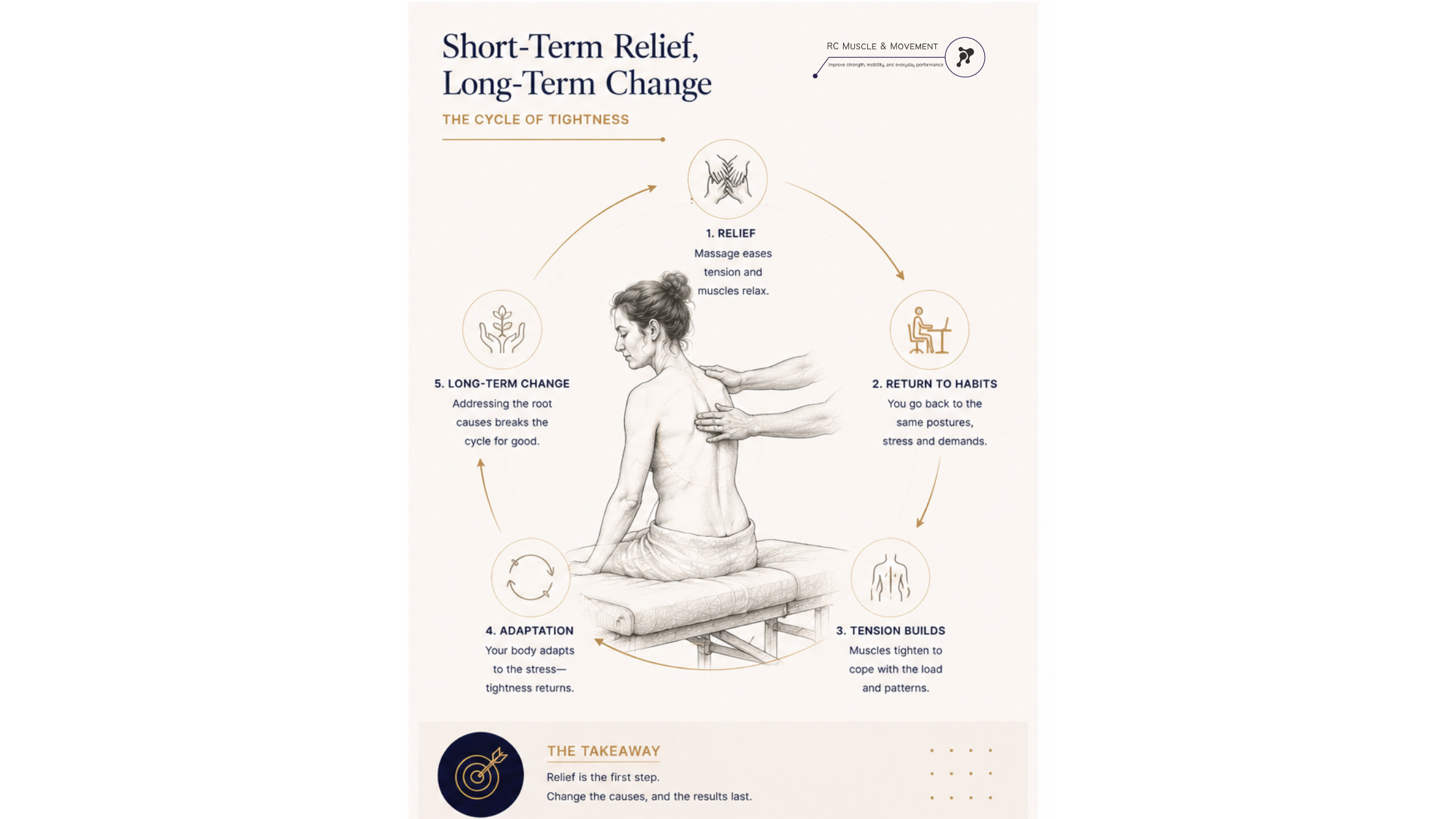
Why Soft Tissue Therapy May Help
Soft tissue therapy is not about “breaking down knots” or forcing muscles to behave.
That language can make the body sound like a faulty machine.
A more accurate way to think about it is this:
Soft tissue therapy may help the body feel more comfortable.
It may help reduce the feeling of tension.
It may help movement feel easier for a while.
It may help someone feel less physically guarded.
It may create a calmer space for the body to settle.
That can be valuable when life has made everything feel tight.
The aim is not to pretend one session changes every cause.
The aim is to support comfort, ease and movement in a realistic way.
What May Change During A Session
People often describe feeling:
lighter
looser
less tense
more comfortable
easier to move
less physically wound up
more aware of where they were holding tension
Those changes can be meaningful.
But they do not need to be exaggerated.
Soft tissue therapy may influence how an area feels, how comfortable someone feels moving, and how settled the body feels after a period of tension or overload.
That is enough.
We do not need to claim that it flushes toxins, breaks down knots, fixes posture or permanently removes the cause of tension.
Those claims are either misleading or too simplistic.
The more useful explanation is:
Your body had been under demand.
The session helped it feel more comfortable.
Now the next step is understanding what helps that comfort last in real life.
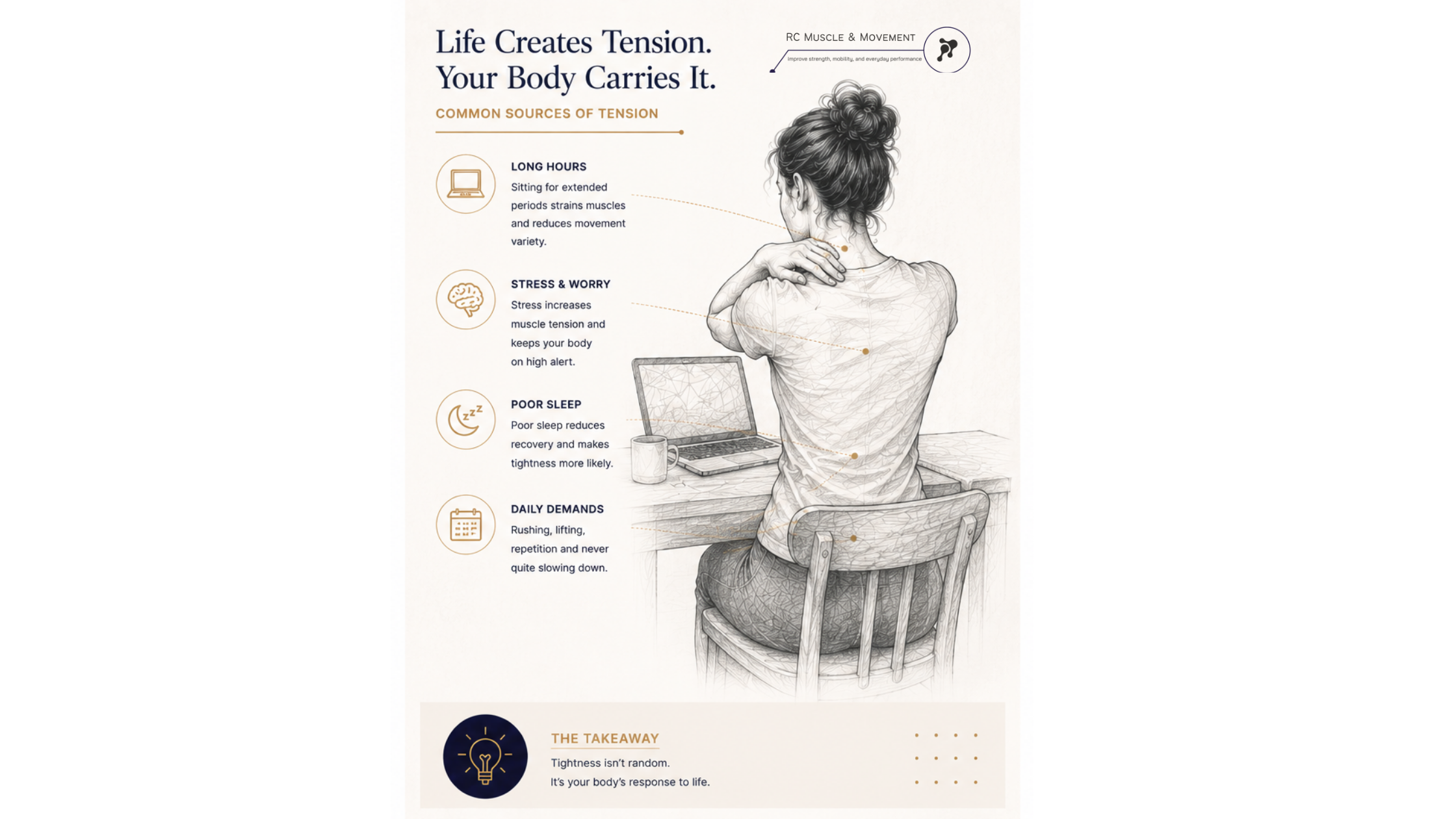
Sometimes people feel great after a massage but then the tightness returns we explore this and potential reasons why and how it doesnt always indicate a massage has failed in our blog , Why Does Tightness Come Back After Massage?
Deep Tissue Massage And General Tension
Deep Tissue Massage usually fits best when someone feels generally tense, heavy or physically overloaded.
This may include:
tight shoulders
a stiff back
general muscular tension
stress-related tightness
feeling wound up
feeling physically tired from a busy routine
wanting hands-on comfort support
This sits inside RCMM’s Comfort Path.
The goal is simple:
Help the body feel more comfortable.
It is not a full movement assessment.
It is not designed to analyse every contributing factor.
It is useful when the main need is comfort, support and a chance for the body to settle.
Sports Massage And More Targeted Tension
Sports Massage may fit better when one area feels more specific.
For example:
one shoulder feels tight
calves feel heavy
hips feel restricted
the lower back feels overloaded
one side feels more tense
a particular area feels like it needs focused work
Despite the name, Sports Massage is not only for athletes.
At RCMM, it can also be useful for everyday adults with specific tight, stiff or overworked areas.
This sits more inside the Movement Path.
The goal is targeted support for an area that feels restricted or uncomfortable.
If your tension feels more specific, recurring or linked to how you move, a Movement & Function Assessment can help build a clearer picture of what may be contributing.
When A Bigger Movement Picture May Be Needed
Sometimes general tension is mainly about comfort and load from life.
Other times, the same areas keep becoming tense again and again because of how the body is sharing work.
For example:
the neck and shoulders always take over
the lower back always feels overloaded
the hips always feel restricted after sitting
one side always feels heavier
movement feels less confident
several areas seem connected
In those cases, soft tissue therapy may still be useful.
But assessment may help answer a different question:
“What keeps making this area work so hard?”
That is where the Function Path fits.
A Movement & Function Assessment looks at how your body moves, what your daily life asks from it, and what may help you feel more capable.
The goal is not to make things complicated.
The goal is to make the picture clearer.
Small Changes That Can Support The Body Between Sessions
This is general guidance, not a treatment plan.
If life regularly makes everything feel tight, small changes may help.
Useful options can include:
breaking up long periods of sitting
changing position more often
taking short walking breaks
using a more comfortable workstation setup
giving yourself a few minutes after work to move
spreading heavier tasks across the week
keeping movement light and manageable when tired
building general strength gradually
protecting sleep where possible
noticing when stress shows up physically
using massage as support, not the only tool
The goal is not to overhaul your life.
Most people do not need a perfect routine.
They need small, realistic changes that make the body feel less trapped in the same demands.
What To Notice If Everything Feels Tight
You do not need to track every detail.
But it can help to notice a few patterns.
Ask:
Does it build through the day?
Is it worse after sitting?
Is it worse after stressful weeks?
Is it worse after poor sleep?
Is it linked to work?
Does movement ease it?
Does rest ease it?
Does it feel general or specific?
Does one area always stand out?
Is it affecting confidence or normal activity?
Those answers can help you choose the right support.
General tension may fit Deep Tissue Massage.
Specific areas may fit Sports Massage.
Recurring or unclear movement issues may fit Movement & Function Assessment.
The more clearly you understand the pattern, the easier it is to choose the right path.
When To Get Medical Advice
Most general tightness and tension is not an emergency.
But it is sensible to seek appropriate medical advice if symptoms are severe, worsening, unusual, linked with numbness, weakness, unexplained swelling, loss of control, fever, chest pain, recent trauma, or symptoms that are not settling as expected.
This is not to create fear.
It is about using the right support at the right time.
If something appears outside the most appropriate scope for an RCMM appointment, we will explain clearly and help guide you toward the most suitable next step.
Key Takeaways
Life can make the body feel tight because the body responds to demand.
Work, stress, sitting, sleep, routine and daily load can all influence how tense, stiff or comfortable you feel.
Soft tissue therapy may help by supporting comfort, reducing the feeling of tension and helping movement feel easier.
But it does not need to be sold as a miracle.
It does not fix modern life.
It gives the body support within the bigger picture.
The useful question is not only:
“How do I get rid of this tightness?”
It may also be:
“What is my body having to manage?”
That question helps people make better decisions about support, movement, rest and everyday routine.
How RCMM Can Help
RC Muscle & Movement is a movement-first sports massage and assessment clinic in East Kilbride.
We support people dealing with tightness, stiffness, restricted movement and areas that feel overworked during everyday life, work and routine.
If life has left your body feeling tense, heavy or physically overloaded, we can help you choose the right starting point.
That may involve:
Deep Tissue Massage for general comfort and tension support
Sports Massage for more specific tight or restricted areas
Movement & Function Assessment when the same issue keeps returning or feels unclear
hands-on soft-tissue support
practical movement guidance
clear explanation in everyday language
The aim is to help everyday movement feel clearer, more comfortable and easier to manage.
If your body feels generally tense or physically overloaded, Deep Tissue Massage may be the best starting point. If one area feels more specific or restricted, Sports Massage may fit better. If the same issue keeps returning or feels unclear, Movement & Function Assessment can help you understand what may be contributing.
Optional related links:
Everyday Movement Support
Neck & Shoulder Pain
Back Pain
Hip Pain
FAQs
Why does my body feel tight even when I have not injured anything?
Your body can feel tight because of everyday demand. Stress, sitting, poor sleep, repeated positions, work and busy routines can all influence how tense or stiff the body feels, even without a clear injury.
Can stress make muscles feel tight?
Yes, stress can show up physically. Some people notice muscle tension, aches, headaches, jaw tension, neck tension or shoulder tension during stressful periods.
Why does sitting make my body feel stiff?
Sitting itself is not bad, but long periods in similar positions can reduce movement variety. When you stand up or start moving again, your body may feel stiff because it has not changed position much.
Can soft tissue therapy help with general tension?
Soft tissue therapy may help some people feel more comfortable, less tense and easier to move. It should be viewed as support for comfort, not a cure-all or a replacement for medical advice when symptoms are concerning.
Is Deep Tissue Massage best for general tightness?
Deep Tissue Massage may be a good fit when the main issue is general tension, heaviness or feeling physically overloaded. If one specific area feels restricted, Sports Massage may be more suitable.
What should I book if everything feels tight?
If the feeling is general, Deep Tissue Massage may be the best starting point. If one area feels more specific, Sports Massage may fit better. If the same issue keeps returning or feels unclear, Movement & Function Assessment may be more useful.
Does soft tissue therapy fix posture?
No. Soft tissue therapy does not “fix posture.” It may help the body feel more comfortable. For many people, more movement variety, better workload awareness and gradual strength matter more than trying to hold a perfect posture.
When should I get medical advice for tension or stiffness?
Seek appropriate medical advice if symptoms are severe, worsening, unusual, linked with numbness, weakness, unexplained swelling, fever, chest pain, recent trauma, or not settling as expected.
Source Base Used
NCCIH. Massage Therapy: What You Need To Know.
NCCIH. Massage Therapy for Health: What the Science Says.
NICE. Low back pain and sciatica in over 16s: assessment and management. NG59.
Furlan AD et al. Massage for low-back pain. Cochrane Database of Systematic Reviews. 2015.
NHS. Get help with stress.
NHS. Every Mind Matters: Stress.
NHS. Physical activity guidelines for adults aged 19 to 64.
WHO. Guidelines on physical activity and sedentary behaviour. 2020.
Bull FC et al. World Health Organization 2020 guidelines on physical activity and sedentary behaviour. British Journal of Sports Medicine. 2020.
NHS. Insomnia.
HSE. Good posture when using display screen equipment.
HSE. Display screen equipment workstation checklist.