Why Your Knees Feel Different on Stairs, Hills, and Flat Ground
Understand how different surfaces you walk affect your knee and pain you may be feeling.
How Hip Strength Influences Knee Comfort — A ClearGuide
straight forward guide exploring the connection between hip movement pattern and knee pain. Discover strategies to help you reduce knee and hip pain
Why Knee Pain Feels Worse After Long Days on Your Feet
Understand the reasons why knee pain may feel worse after long days on your feet and discover tips to reduce pain and find comfort
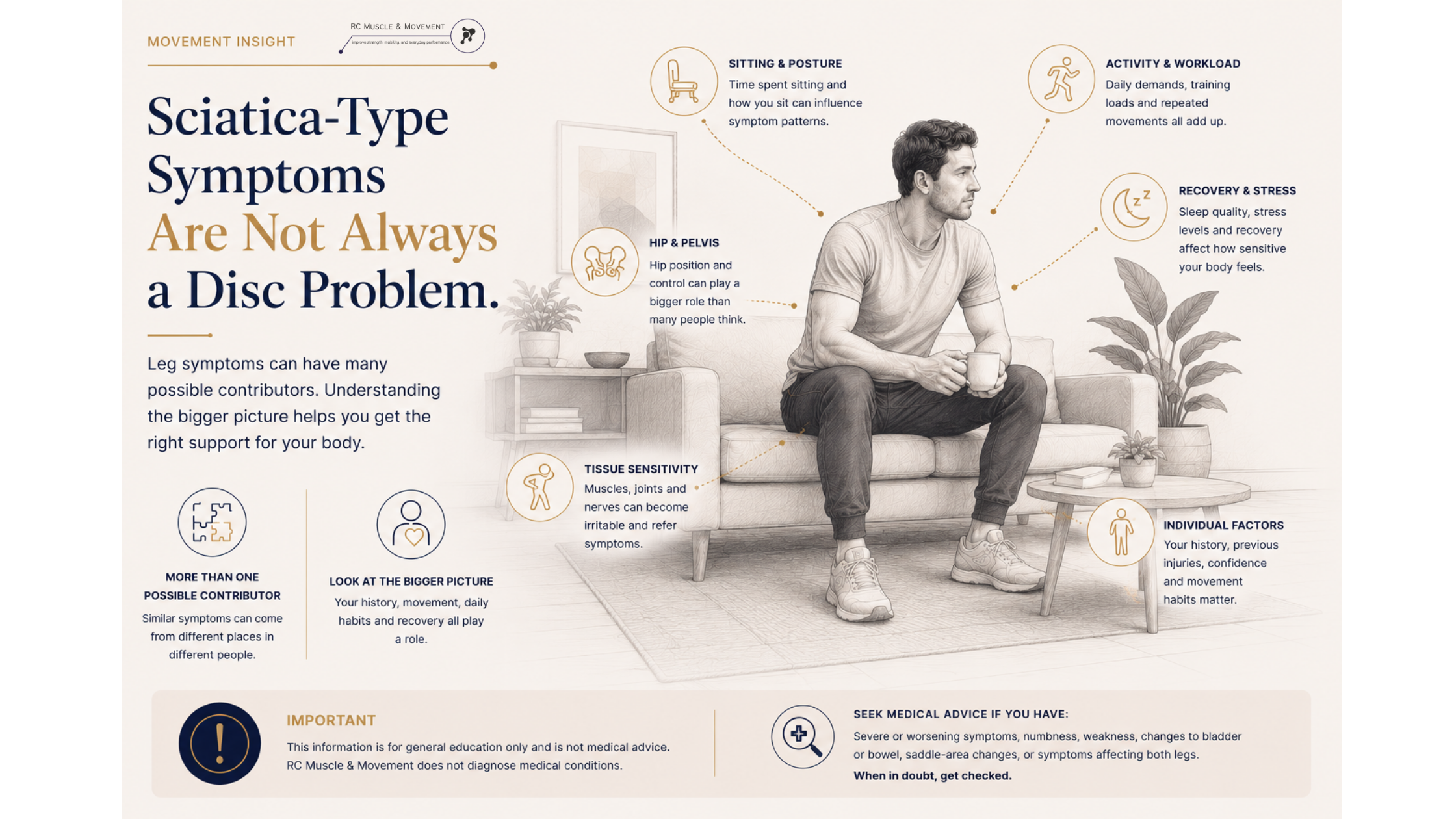
Sciatica-Type Symptoms Are Not Always a Disc Problem
Sciatica-type symptoms do not always mean a disc problem. Symptoms that travel into the buttock, back of the thigh, calf or foot can be influenced by the lower back, hip, pelvis, deep gluteal area, sitting position, movement habits and nervous system sensitivity. A medical assessment is important if symptoms are severe, worsening, affecting both legs, or linked with changes in bladder, bowel or saddle sensation.
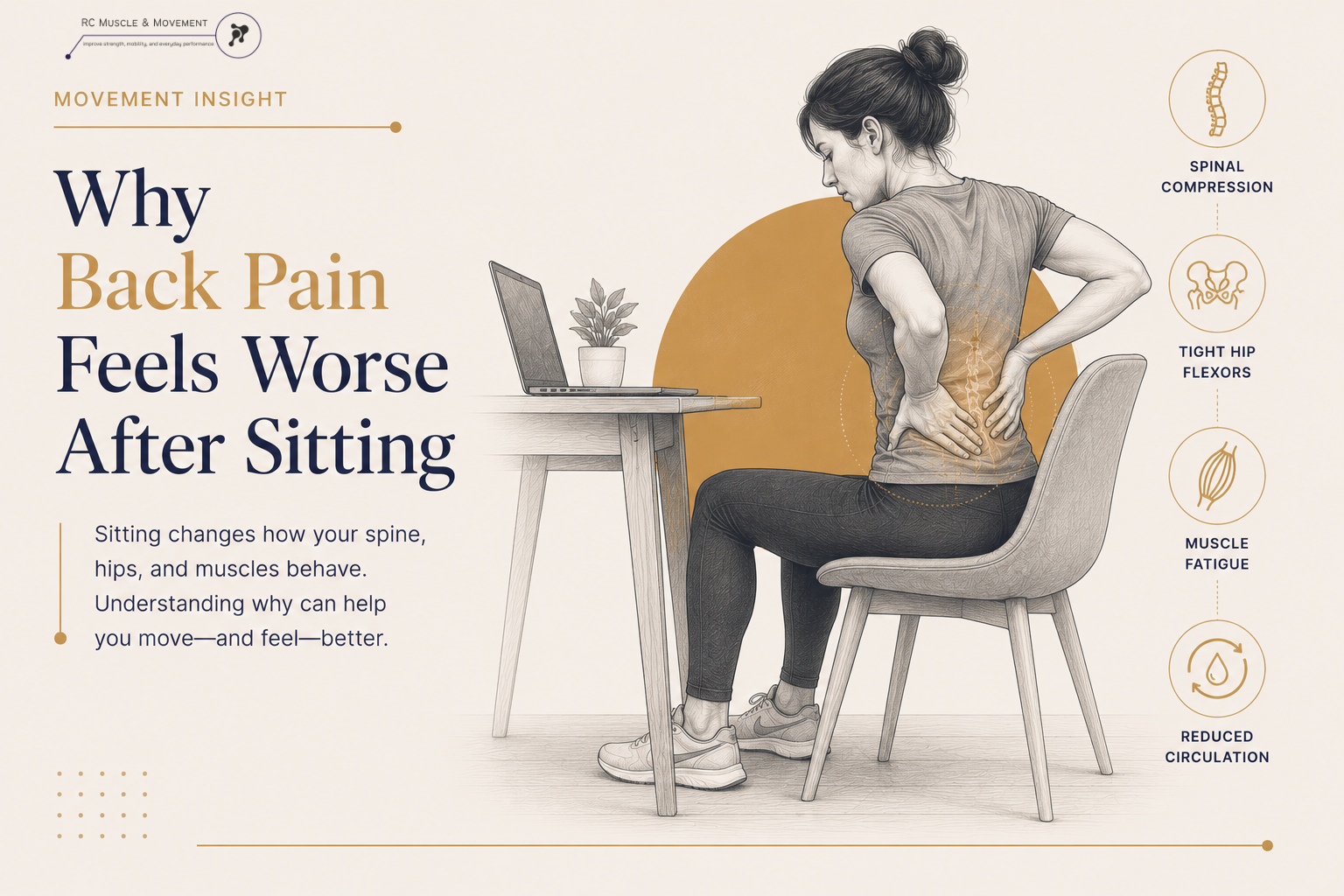
Why Back Pain Feels Worse After Sitting
Back pain can feel worse after sitting because your body has spent a long time in one position with limited movement variety. Sitting can change how load is shared through your hips, pelvis and lower back. This does not automatically mean damage. For many people, stiffness after sitting improves once movement returns.
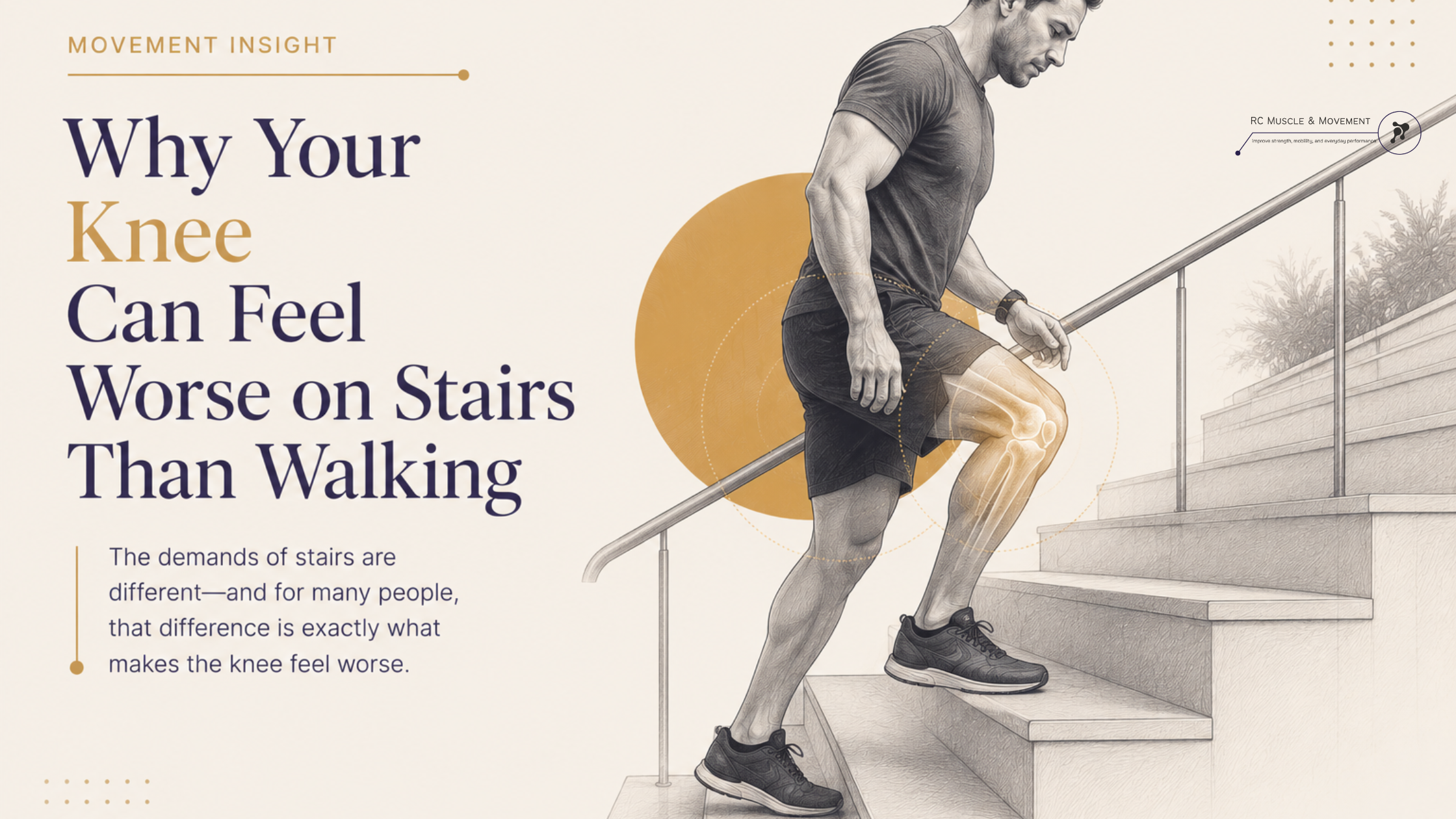
Why Your Knee Can Feel Worse on Stairs Than Walking
Knee pain can feel worse on stairs because stairs ask more from the knee than level walking. The knee bends more, the leg muscles work harder, and the hips, ankles and feet all help share the load. If stairs keep feeling harder than they should, it may help to look at strength, movement habits, daily workload and how your body is sharing effort.